
Close Menu
  • Home
  • News
    • National
    • International
  • Business
  • Education
  • Featured
  • Health
  • Politics
  • Sports
  • Videos
  • More
    • About Us
    • Contact Us
    • Privacy Policy
Facebook X (Twitter) Instagram
Facebook Instagram TikTok
BROWN PIGEON MEDIA
SUBSCRIBE
  • Home
  • News
    1. National
    2. International
    3. View All

    Ganduje, NGF chairman join special democracy day prayer as FG pledges stronger democracy

    June 6, 2026

    Members Reps Raise Concern Over Rejection of Corps Members by Government Agencies

    June 5, 2026

    Tinubu Ya Yaba Da Rawar Sojin Ruwa Wajen Kare Arzikin Najeriya

    June 2, 2026

    TINUBU: CIRE TALLAFIN FETUR YA CECI NAJERIYA DAGA DURKUSHEWAR TATTALIN ARZIKI

    May 30, 2026

    Yan Sanda a ƙasar Turkiyya Sun Gano Baƙin Haure 30 da aka Boye a Cikin Wata Tankar Mai

    June 5, 2026

    Saudiyya Ta Raba Alƙur’ani Miliyan 1.9 Ga Alhazan Bana

    June 2, 2026

    AN HANA YIN LAYYA DA BIJIMIN “DONALD TRUMP” A BANGLADESH

    May 28, 2026

    MAHAJJATA MILIYAN 1.6 SUN HALLARA A FILIN ARAFAT DOMIN SAUKE FARALI A AIKIN HAJJI

    May 26, 2026

    NDC INDIA DELEGATION VISITS 81 DIVISION, SEEKS INSIGHTS INTO ITS STRATEGIC SECURITY OPERATIONS

    June 6, 2026

    From Chibok to Dapchi and Oriire: Coincidence, Consequence, or Political Instrument?

    June 6, 2026

    DMCSA Sets for Grand Celebration of Governor Abba’s First-Term Milestones

    June 6, 2026

    Ganduje, NGF chairman join special democracy day prayer as FG pledges stronger democracy

    June 6, 2026
  • Business

    Dangote Industrialising Africa– NCCIMA DG

    May 17, 2026

    INEC TA BUKACI MASU RIJISTAR KATIN ZABE A KANO DA SU JE SU DUBA SUNAYENSU

    April 27, 2026

    KANO TO HOST NATIONAL LAUNCH OF ECoN INITIATIVE, SET TO DRIVE INNOVATION AND INDUSTRIAL GROWTH IN NORTH-WEST

    April 16, 2026

    NewsNigeria’s Inflation Rate Climbs to 15.38% in March

    April 16, 2026

    Tsohon Ministan sufurin jiragen sama na Najeriya, Hadi Sirika, ya musanta zargin cewa aikin samar da kamfanin jirgin saman Najeriya na ‘Nigeria Air’ da gwamnatin tsohon shugaban ƙasar Muhammadu Buhari ta ƙaddamar a zamaninta na bogi ne

    September 4, 2025
  • Education

    Federal Polytechnic Kaura Namoda Declares 2-Week Break After 7 Students Abducted Off-Campus

    June 6, 2026

    From Emergency to Excellence: How Kano Conquered Nigeria’s 2025 NECO Results in Three Years

    May 30, 2026

    GWAMNATIN KANO TA BAI WA DALIBAI HUTUN BABBAR SALLAH

    May 20, 2026

    KANO STUDENTS FORUM APPLAUDS GOV. YUSUF’S EDUCATION REFORMS, BACKS SECOND-TERM BID

    May 11, 2026

    AKCILS Hits 50-Year Milestone, Hosts Lavish Golden Jubilee

    April 30, 2026
  • Featured

    Kano State Government Organises Two-Day Retreat for Online Media Publishers in Jigawa

    January 15, 2026

    Former Kano APC Councilors Hold Special Prayers for Governor Abba Kabir Yusuf

    October 27, 2025

    Mustapha Salisu Makes Azerbaijan Move

    September 9, 2025

    Delta 2025 NYG: Team Kano Finish 9th With 14 Medals

    September 8, 2025

    Kano Government Clarifies Position on Elders Council, Backs Its Own Initiative

    September 7, 2025
  • Health

    Zulum Sets 60-Day Deadline for 400-Bed Teaching Hospital, Orders Completion of Orthopaedic Hospital in Four Months

    June 6, 2026

    ABU TEACHING HOSPITAL COMMEMORATES WORLD HYPERTENSION DAY 2026.

    June 6, 2026

    Zulum Directs Distribution of Free Cholera Drugs, Medical Consumables to Health Facilities

    June 1, 2026

    PUTTING CHILDREN FIRST: ONE KANO AGENDA COMMENDS DAN BELLO’S EDUCATIONAL SUPPORT INITIATIVE

    May 25, 2026

    DR. MUZAKKARI DRIVES DIGITAL HEALTH INNOVATION IN KANO STATE

    May 12, 2026
  • Politics

    Aggregated Themes of Negative Utterances: Historical Revisionism and the Politics of Identity in Contemporary Nigeria

    June 6, 2026

    Kwankwaso Will Ruin Your Presidential Bid, Primate Ayodele Warns Peter Obi

    June 5, 2026

    From Chibok to Dapchi and Oriire: Coincidence, Consequence, or Political Instrument?

    June 5, 2026

    ATM Gwarzo Ya Musanta Rahotannin Komawa NDC da Neman Takarar Sanata a 2027

    June 5, 2026

    Sokoto South ADC Chairman Defects To APC

    June 5, 2026
  • Sports

    Bichi First FC Unveils Abubakar Senior as New Technical Adviser

    September 11, 2025

    Mustapha Salisu Makes Azerbaijan Move

    September 9, 2025

    Delta 2025 NYG: Team Kano Finish 9th With 14 Medals

    September 8, 2025

    If Super Eagles Fail to Qualify for World Cup, Nigerians Will Not Forgive Us – Ahmed Musa

    September 6, 2025

    Super Falcons striker and six-time African Women’s Footballer of the Year, Asisat Oshoala, has completed her move from Bay FC to Saudi Women’s Premier League side Al Hilal

    September 3, 2025
  • Videos
  • More
    • About Us
    • Contact Us
    • Privacy Policy
BROWN PIGEON MEDIA
Home » Aggregated Themes of Negative Utterances: Historical Revisionism and the Politics of Identity in Contemporary Nigeria
Politics

Aggregated Themes of Negative Utterances: Historical Revisionism and the Politics of Identity in Contemporary Nigeria

Brown Pigeon MediaBy Brown Pigeon MediaJune 6, 20265 Mins Read
Facebook Twitter WhatsApp Telegram Email Copy Link
Mutawakkilu Ibrahim Idris
Aggregated Themes of Negative Utterances: Historical Revisionism and the Politics of Identity in Contemporary Nigeria
Mutawakkilu Ibrahim Idris
Aggregated Themes of Negative Utterances: Historical Revisionism and the Politics of Identity in Contemporary Nigeria


By Mohammed Babagana Abubakar


In contemporary Nigerian politics, public discourse is increasingly shaped not only by official party platforms and policy debates but also by the often unregulated rhetoric circulating across social media platforms. While political criticism remains an essential feature of democracy, the rise of digital echo chambers has introduced a troubling trend: the systematic revision of historical narratives to serve present-day political objectives.


Among some online supporters associated with opposition political movements, particularly within the broad coalition popularly referred to as the OK Movement, recurring narratives have emerged that target key figures of Northern Nigerian history. These narratives are not merely expressions of policy disagreement. Rather, they frequently reinterpret historical events and personalities through a modern partisan lens, often stripping away context and replacing scholarly understanding with emotionally charged accusations.


An examination of social media discussions, comment sections, online forums, and political debates reveals three dominant themes that repeatedly surface. Collectively, these themes challenge foundational aspects of Northern historical identity and contribute to growing regional distrust.


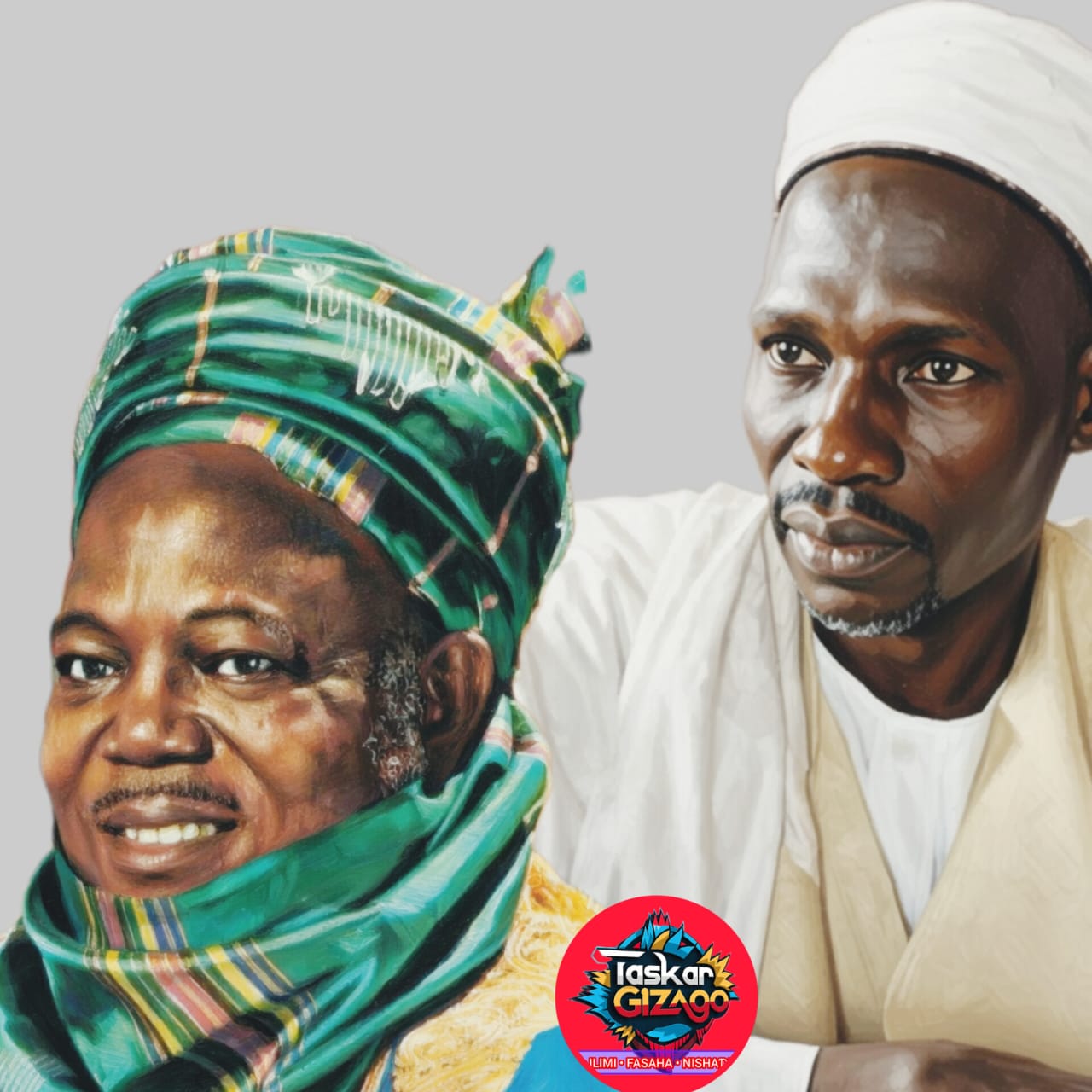
The first recurring theme centers on Sheikh Usman dan Fodio, one of the most influential figures in West African history.


Widely recognized by historians as an Islamic scholar, jurist, educator, and reformer, dan Fodio led the nineteenth-century reform movement that culminated in the establishment of the Sokoto Caliphate. His movement sought to address issues of governance, corruption, social justice, and religious practice within Hausaland.


Yet within certain digital political spaces, his legacy is increasingly subjected to revisionist interpretations. Online commentators often remove dan Fodio from his historical and intellectual context, portraying him exclusively as an ethnic conqueror whose actions allegedly laid the foundation for contemporary security challenges.


In heated discussions surrounding banditry, insurgency, and farmer herder conflicts, his name is frequently invoked as a symbol of an alleged centuries-long project of territorial domination. Such narratives attempt to connect present day criminal activities to an imagined historical agenda originating in the nineteenth century.


This interpretation overlooks the complex political, social, and economic realities that shape modern security challenges. More importantly, it transforms a historical scholar into a political caricature, encouraging suspicion and resentment among communities that should instead be seeking common ground.


The second theme focuses on Sir Ahmadu Bello, the Sardauna of Sokoto and the late Premier of Northern Nigeria.


Few leaders have left a greater imprint on Northern development than Ahmadu Bello. At the approach of independence, Northern Nigeria faced significant educational and administrative disadvantages compared to other regions. To address these disparities, the Northern Regional Government implemented what became known as the Northernization Policy.


The policy was designed to increase indigenous Northern participation in public administration and ensure that the region possessed the human resources necessary for self-governance within an emerging federal system.


However, contemporary digital critics often reinterpret these efforts as evidence of deliberate ethnic favoritism. Historical speeches and archival footage are frequently circulated without context, portraying the Sardauna as the architect of tribalism rather than a leader responding to extraordinary developmental challenges.


Within these narratives, policies intended to create regional balance are reframed as mechanisms of domination. The complexities of post-colonial nation building are reduced to simplistic accusations, while the broader historical circumstances that necessitated such interventions are largely ignored.


This approach not only distorts history but also undermines a nuanced understanding of the difficult decisions confronting Nigeria’s founding generation.


The third recurring theme concerns Sir Abubakar Tafawa Balewa, Nigeria’s first Prime Minister.


Balewa occupies a unique place in Nigerian history. Renowned for his diplomatic skill, eloquence, and commitment to constitutional governance, he guided the country through the delicate early years of independence. Internationally respected and domestically admired, he sought to maintain national cohesion within an immensely diverse federation.


Yet online political discourse increasingly presents a different picture. Balewa is often portrayed as a passive leader lacking independent authority, with critics characterizing his administration as subordinate to regional interests or external influences.


Such interpretations frequently ignore the immense structural challenges facing the First Republic, including regional rivalries, constitutional limitations, colonial legacies, and emerging political tensions. Rather than acknowledging these complexities, some commentators place disproportionate responsibility for the collapse of the First Republic and the instability that followed solely upon Balewa’s shoulders.


His preference for consensus-building and dialogue is routinely recast as indecisiveness, while his commitment to constitutional processes is described as weakness rather than democratic leadership.


Taken together, these three themes reveal a broader pattern extending beyond ordinary political criticism. They represent competing interpretations of history that increasingly influence contemporary political identities.


Every society depends on a shared understanding of its past. While historical figures should remain open to scholarly scrutiny and legitimate debate, reducing complex legacies to simplistic political slogans risks deepening divisions rather than promoting understanding.


For political movements seeking national acceptance, the challenge is not merely electoral success but the cultivation of a discourse that respects the historical experiences of all regions and communities. Allowing hostile and revisionist narratives to flourish unchecked can create the perception that entire cultural and historical traditions are being dismissed or delegitimized.


Nigeria’s future depends on building bridges across its diverse identities. Achieving that goal requires a commitment to historical accuracy, intellectual honesty, and mutual respect. Genuine national reconciliation cannot emerge from the selective reinterpretation of history but from a willingness to engage with the past in all its complexity.


As the nation continues its democratic journey, political actors and citizens alike must recognize that preserving historical nuance is not an act of regional loyalty alone it is a prerequisite for national unity and sustainable democratic development.

Share. Facebook Twitter LinkedIn Telegram Email VKontakte WhatsApp Copy Link
Previous ArticleFrom Chibok to Dapchi and Oriire: Coincidence, Consequence, or Political Instrument?
Next Article ABU TEACHING HOSPITAL COMMEMORATES WORLD HYPERTENSION DAY 2026.

Related Posts

Kwankwaso Will Ruin Your Presidential Bid, Primate Ayodele Warns Peter Obi

June 5, 2026

From Chibok to Dapchi and Oriire: Coincidence, Consequence, or Political Instrument?

June 5, 2026

ATM Gwarzo Ya Musanta Rahotannin Komawa NDC da Neman Takarar Sanata a 2027

June 5, 2026

Sokoto South ADC Chairman Defects To APC

June 5, 2026

KWANKWASO/OBI, DO THE ATTACKS ON OUR NORTHERN HEROES PLEASE YOU?

June 5, 2026

KWANKWASO SECRET EXPOSED: MISUSE OF BLINDFOLDED SUPPORTERS TO CASTIGATE NORTHERN HEROES

June 5, 2026
Add A Comment
Leave A Reply Cancel Reply

Stay In Touch
  • Facebook
  • Twitter
  • Instagram
  • YouTube
  • TikTok
  • Telegram
  • WhatsApp
Latest Posts

Zulum Sets 60-Day Deadline for 400-Bed Teaching Hospital, Orders Completion of Orthopaedic Hospital in Four Months

By Brown Pigeon MediaJune 6, 2026

Borno State Governor, Professor Babagana Umara Zulum, on Friday, inspected the multi-billion naira 400-bed…

FARMER GOVERNOR UMARU BAGO REITERATES HIS SUPPORT TO POLO SPORT.

June 6, 2026

NDC INDIA DELEGATION VISITS 81 DIVISION, SEEKS INSIGHTS INTO ITS STRATEGIC SECURITY OPERATIONS

June 6, 2026

ABU TEACHING HOSPITAL COMMEMORATES WORLD HYPERTENSION DAY 2026.

June 6, 2026

Aggregated Themes of Negative Utterances: Historical Revisionism and the Politics of Identity in Contemporary Nigeria

June 6, 2026
© 2026 Brown Pigeon Media. Developed by: ENGRMKS & CO.
  • Home
  • About Us
  • Contact Us
  • Privacy Policy

Type above and press Enter to search. Press Esc to cancel.