

By Mohammed Babagana Abubakar
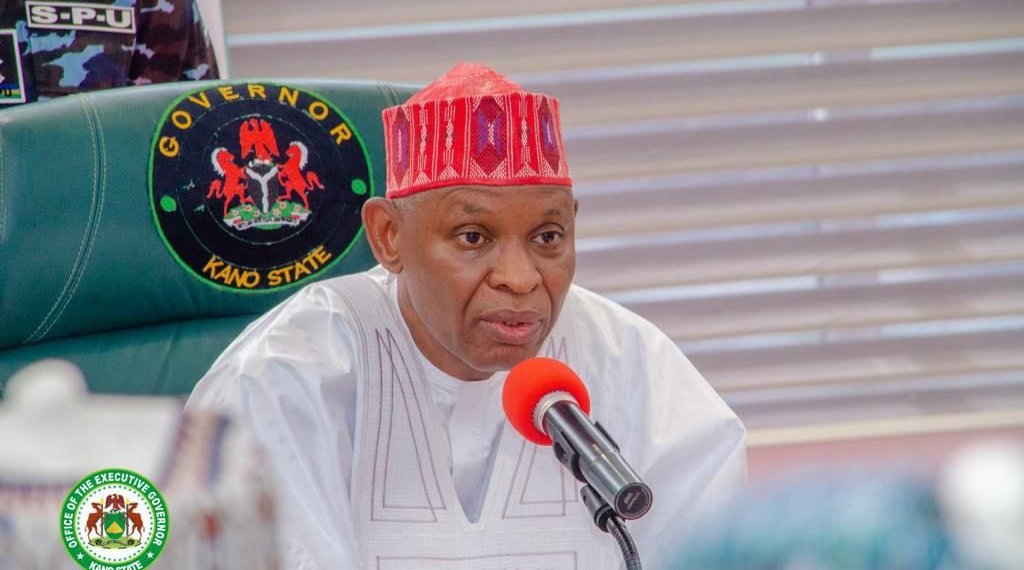
In Nigeria’s evolving democratic landscape, effective governance is increasingly measured not by political rhetoric but by tangible improvements in the lives of citizens. Across the northern region, where governments face enormous challenges in education, healthcare, infrastructure, and security, leadership is being tested by its ability to deliver measurable results. In Kano State, Governor Abba Kabir Yusuf has emerged as a notable example of a leader seeking to redefine public service through a governance philosophy anchored on one principle: service over self.
Since assuming office, Governor Yusuf has maintained a deliberate focus on policy implementation rather than political confrontation. While many public officials often become consumed by partisan disputes and media battles, the Kano governor has largely concentrated on addressing the developmental needs of the state’s growing population. This approach has helped shape an administration that places institutional progress above personal political interests.
The clearest demonstration of this philosophy can be seen in the administration’s unprecedented investment in human capital development. Recognizing education as the foundation of sustainable economic growth, the government declared a state of emergency in the sector and backed the declaration with significant financial commitment. The state’s budget allocates ₦432.4 billion to education, representing 29.4 percent of total expenditure and surpassing the 26 percent benchmark recommended by UNESCO.
Beyond the figures, the allocation reflects a broader strategy aimed at improving access to quality education across Kano State. Hundreds of classrooms are being constructed, thousands of existing facilities are undergoing renovation, and more than 8,000 teachers have been recruited or promoted to strengthen learning outcomes. The administration has also sustained domestic and international scholarship programmes that provide opportunities for talented but financially disadvantaged students to pursue higher education.
Healthcare has received similar attention. With ₦214.8 billion allocated to the sector, the government is pursuing the modernization of healthcare facilities while expanding access to essential medical services. Primary healthcare centres are being upgraded, selected facilities are being transformed into fully functional general hospitals, and free maternal and child healthcare programmes continue to provide relief for vulnerable families. These interventions reflect a governance model that views healthcare and education not as privileges, but as fundamental rights deserving sustained public investment.
Infrastructure development has also become a defining feature of the administration. Across Kano’s 44 local government areas, road construction and rehabilitation projects are improving connectivity between urban and rural communities. These projects are not only enhancing transportation but are also facilitating trade, improving access to markets, and supporting broader economic activity. The administration’s achievements in this sector recently earned Governor Yusuf recognition as Infrastructure Governor of the Year at the Africa International Housing Show, underscoring the growing national attention being paid to Kano’s development trajectory.
Kano first
Equally important is the administration’s commitment to maintaining peace and security. Kano remains one of the more stable states in the federation, a status achieved through a combination of collaboration with security agencies and community based initiatives. Rather than relying solely on conventional security measures, the government has adopted preventive and non kinetic approaches designed to address the social conditions that often contribute to insecurity.
Programmes such as the Safe Corridor Initiative focus on youth engagement and rehabilitation, helping to redirect vulnerable young people away from crime and social vices. In addition, the Kano State Neighbourhood Watch Corps has strengthened community participation in local security efforts, creating a framework through which residents can contribute to safeguarding their communities while working alongside formal security institutions.
Taken together, these initiatives present a broader lesson about governance in Northern Nigeria. Governor Abba Kabir Yusuf’s administration demonstrates that public trust is strengthened when governments prioritize service delivery, invest in human development, and pursue long term solutions to societal challenges. While no administration is without its limitations, Kano’s experience offers valuable insights into how focused leadership can accelerate development even in a complex political environment.
As the state continues its development journey, the enduring significance of Governor Yusuf’s approach may lie not only in the projects completed or budgets allocated, but in the governance culture being established. By emphasizing service above personal ambition, accountability above political spectacle, and development above division, Kano is increasingly positioning itself as a model for effective subnational governance. In an era where citizens demand results rather than promises, that may prove to be the most important achievement of all.