

By Shariff Aminu Ahlan
In every democratic society, citizens have a responsibility to scrutinize those who seek the highest office in the land. Presidential aspirants are expected not only to identify the nation’s challenges but also to present clear, practical, and achievable solutions to them. As Nigeria gradually moves toward the 2027 general elections, public attention is increasingly focused on the visions, records, and policy proposals of those aspiring to lead the country.
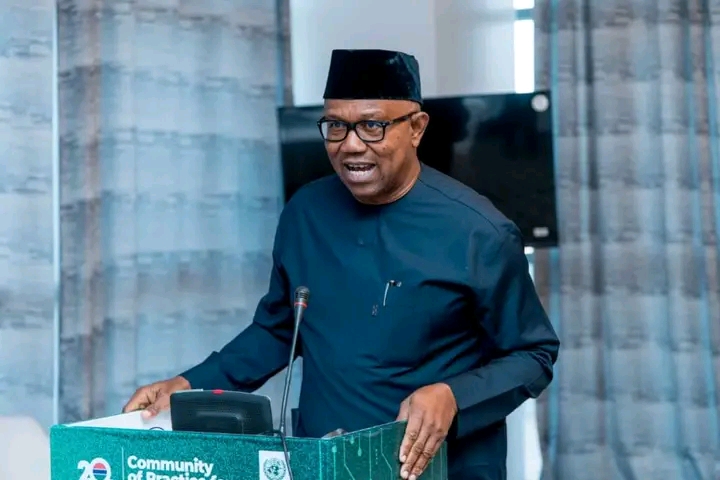
Among the most prominent opposition figures is Peter Obi, a politician whose supporters often point to his tenure as Governor of Anambra State as evidence of his leadership capacity. Obi has consistently maintained that his experience and credentials position him to lead Nigeria toward greater prosperity and stability.
However, a recent interview with journalist Rufai Oseni sparked debate among political observers and commentators. The interview, which lasted over an hour, provided Obi with an opportunity to explain how he intends to tackle some of Nigeria’s most pressing challenges, including insecurity, power supply, education, poverty, and economic instability.
Some critics who watched the interview argued that while Obi effectively described the kind of Nigeria he hopes to build, he did not provide enough details regarding the specific strategies he would employ to achieve those goals. According to these critics, several questions about implementation were met with references to his performance in Anambra State rather than detailed national policy frameworks.
One commentator summarized his impression as follows:
“Every time Rufai pressed him with questions such as, ‘How will you fix power, education, and insecurity?’ Obi frequently pointed to his achievements in Anambra State. Critics argue that governing a state and governing a nation of over 200 million people are fundamentally different challenges requiring different levels of planning, resources, and coordination.”
The same critics contend that many of Nigeria’s current challenges, including widespread insecurity, economic hardship, energy shortages, debt pressures, and currency instability—extend far beyond the scope of issues a state governor would ordinarily confront. Consequently, they argue that past state-level achievements alone may not be sufficient proof of an ability to solve national problems.
Supporters of Obi, on the other hand, maintain that his record in Anambra demonstrates fiscal discipline, prudent management, and effective governance. They argue that these qualities could be scaled to the national level if given the opportunity.
Kano first
The interview also revived discussions surrounding some of Obi’s past statements on national unity, security, and dialogue with various groups. Critics have questioned certain positions they believe require further clarification, while supporters insist that engagement and dialogue remain legitimate tools in conflict resolution when applied within the framework of the law and national interest.
Ultimately, the interview appears to have deepened an existing debate rather than settled it. For supporters, it reinforced confidence in Obi’s leadership credentials. For critics, it highlighted what they perceive as gaps between aspirations and concrete policy execution.
As the 2027 election season approaches, Nigerians will undoubtedly continue to examine not only the promises of presidential hopefuls but also the practicality, clarity, and feasibility of their proposed solutions. In a democracy, voters must carefully evaluate every candidate based on verifiable records, policy substance, and the ability to translate vision into measurable results.
The central question remains: Can presidential aspirants move beyond describing the destination and provide a detailed roadmap for how the nation will get there? That is a question every candidate seeking Nigeria’s highest office will ultimately have to answer.
Suffice it to say that some Nigerians believe they have seen aspects of Peter Obi’s political views and positions that raise concerns about his vision for the corporate existence and unity of the nation. Critics often point to his comments regarding the release of Nnamdi Kanu, the leader of the Indigenous People of Biafra (IPOB), as evidence of what they perceive as a controversial stance on national unity.
Peter Obi has publicly stated that he would seek a political solution to the issue involving Nnamdi Kanu if elected president. To his critics, such statements raise questions about how he would handle separatist agitations and other sensitive national security matters. They argue that any approach to such issues must prioritize the unity, stability, and sovereignty of Nigeria.
Critics further contend that Obi has not sufficiently demonstrated how his proposed policies would address some of the country’s most pressing challenges. In their view, Nigeria requires practical and comprehensive solutions to insecurity, economic hardship, unemployment, and infrastructure deficits rather than broad political promises.
It is also the opinion of some of his opponents that certain political positions associated with Obi could heighten ethnic and regional tensions if not carefully managed. They argue that leadership at the national level requires a unifying approach capable of bringing together Nigerians from all backgrounds, irrespective of tribe, religion, or region.
Ultimately, Nigerians will continue to assess all presidential aspirants based on their records, policy proposals, and capacity to provide effective leadership. The responsibility lies with the electorate to carefully examine the strengths and weaknesses of every candidate before making their choice at the ballot box.
Allah ya kiyaye.