

By Zainab Shuaibu Abdullahi,
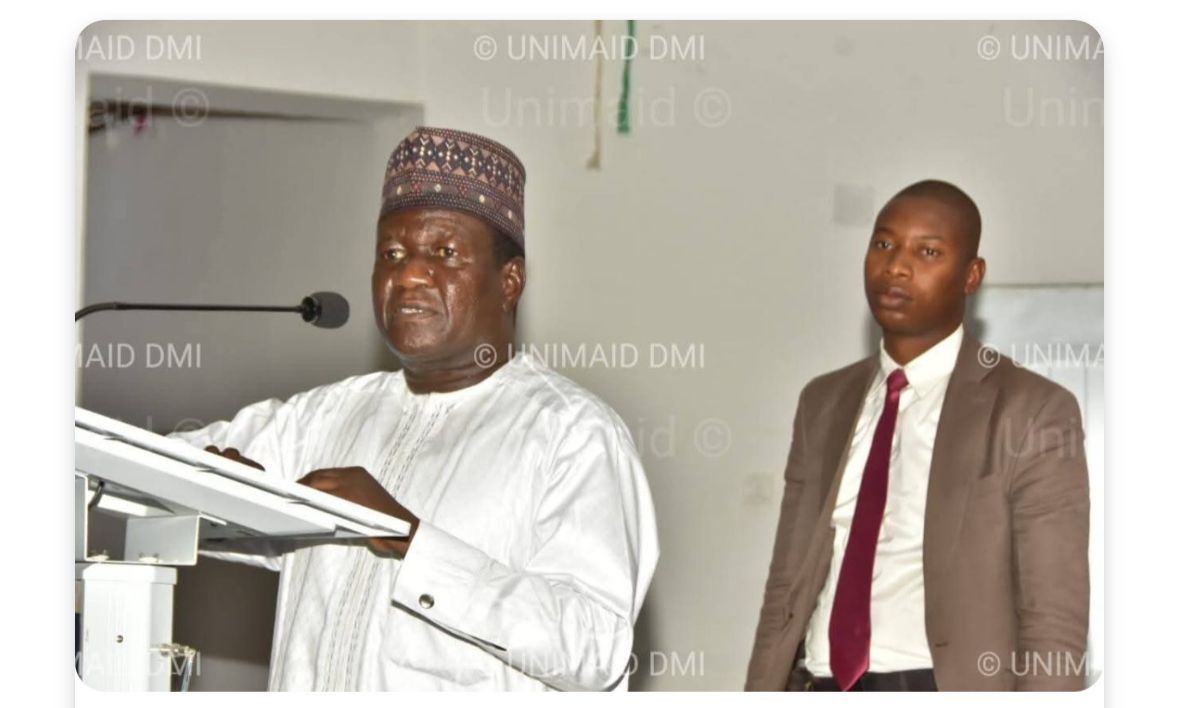
The Vice-Chancellor of University of Maiduguri, Professor Mohammed Laminu Mele, has reaffirmed the institution’s commitment to building a resilient and globally competitive scientific ecosystem, as he addressed participants at the 3rd Departmental Colloquium of the Department of Microbiology.
The event, held on Monday, April 27, 2026, at the Muhammadu Indimi International Conference Centre, brought together scholars, researchers, and students in a strong display of academic excellence and innovation.
Professor Mele described the colloquium as a testament to the university’s enduring culture of consistency, research-driven innovation, and academic integrity. He expressed pride in the department’s growing international recognition, citing research contributions from countries such as Malaysia, Turkey, and Libya as evidence of its expanding global footprint.
According to the Vice-Chancellor, such international collaborations are critical to strengthening the university’s reputation and advancing its research capacity. He assured stakeholders of continued institutional support through improved infrastructure, enhanced laboratory facilities, and sustainable power supply to enable optimal academic performance.
The colloquium, themed “From Mentorship to System Building: Sustainable Scientific Ecosystem in Resource-Limited Setting,” featured a keynote address by renowned neuroscientist, Mahmoud Bukar Maina, an alumnus of the institution.
Professor Maina shared his journey from a UNIMAID undergraduate to a global researcher and Director at Trends in Africa, as well as his current work at the University of Sussex. He attributed his success, including securing multi-million-pound research grants, to the strong mentorship culture he experienced during his time at the University of Maiduguri.
He urged students to actively seek diverse mentorship opportunities, emphasizing that mentorship should be strategic and purposeful. Highlighting his pioneering stem cell research, Professor Maina noted that his work focuses on developing therapies tailored to African populations—an innovation rooted in the academic foundation he received.
Earlier, the Head of the Department of Microbiology, Dr. Adam Mustapha, revealed that the department has made significant academic strides, graduating 50 postgraduate students within three sessions, with over 100 currently enrolled.
He outlined several student-focused initiatives, including the Microbial Board of Fame and the Three-Minute Project (3MP) competition, designed to nurture young researchers and promote academic excellence.
Dr. Mustapha also commended the university management for critical interventions such as the provision of solar power to laboratories and the activation of the Molecular Laboratory, which he described as pivotal to the department’s rising academic profile.
The colloquium introduced a “Young Researchers’ Session,” further reinforcing its commitment to grooming the next generation of scientists. Stakeholders at the event collectively reaffirmed their resolve to sustain the momentum of research excellence, mentorship, and innovation within the institution.