


By Munir Ibrahim Publisher, Political Analyst
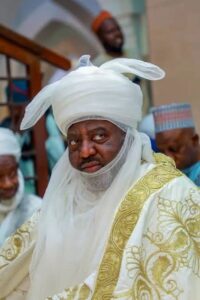
The events surrounding Kano on Sunday, 27th September 2026, particularly the public appearance of the 15th Emir of Kano, His Royal Highness Alhaji Aminu Ado Bayero, during the Fatahu Yakasai activities, deserve sober political and institutional reflection. The appearance came at a sensitive period in Kano’s history, when the Emirate question remains entangled in an unresolved legal dispute and the political atmosphere is becoming increasingly charged ahead of 2027. Reports indicate that Bayero proceeded from his mini-palace to his private residence in Mandawari, attracting a substantial crowd along the route.
When a matter is before a competent court, every stakeholder has a responsibility to exercise restraint and allow the judicial process to run its course. In that context, Aminu Ado Bayero, whose claim and position remain part of the wider Emirate controversy, is expected to respect the existing legal and institutional order, maintain the status quo and avoid actions or public mobilisation capable of creating the impression that the matter is being settled outside the courtroom.
This is not an argument against Bayero’s fundamental rights as a citizen, nor is it a denial of his historical position within Kano’s traditional institution, it is an argument for institutional discipline. A pending court matter should not become a platform for competing claims of authority, street mobilisation or confrontation with government institutions. Where any party believes that a government action is inconsistent with the law or a court order, the proper avenue is to return to the courts and seek clarification or appropriate legal relief. The Kano State Government itself has recently emphasised that lawful directives remain binding unless they are set aside, suspended or altered by a competent authority.
The political dimension of the recent developments should equally not be overlooked. Allegations that political posters associated with President Bola Ahmed Tinubu and Governor Abba Kabir Yusuf were removed or destroyed during activities surrounding the period have generated controversy. The Kano State government should therefore take serious actions to stop that, and to question the 15th Emir if he is into politics now.
President Tinubu and Governor Abba represent an established political structure with recognised party organisations, supporters and democratic mechanisms through which their political programmes can be presented to the people. Their political future should therefore be contested through political engagement, persuasion and the ballot box, not through intimidation, destruction of political materials or attempts to turn traditional institutions into instruments of partisan confrontation. Equally, opposition to their policies or political programmes is legitimate in a democracy, provided it remains within the bounds of law and peaceful political participation.
The central lesson from the events of 27th September is therefore the need for restraint on all sides. Kano’s traditional institutions carry enormous cultural influence and should be protected from becoming casualties of partisan competition. Aminu Ado Bayero, like every other stakeholder in the Emirate dispute, should allow the courts to determine the legal questions before them and maintain the status quo while the judicial process continues. The same principle should apply to political actors: nobody should use political disagreements as justification for disorder, intimidation or attacks on the symbols of another political group.
Kano is approaching another decisive political period, and the state needs stability more than confrontation. President Tinubu’s Renewed Hope agenda and Governor Abba Kabir Yusuf’s Kano First political direction will ultimately be judged by citizens through democratic processes, just as opposing political positions will have the opportunity to compete for public support. The Emirate question, meanwhile, belongs principally to the courts and the lawful institutions empowered to resolve it. The most responsible course for everyone, including traditional authorities, is therefore to respect the law, preserve the status quo, reject provocation and allow Kano’s political future to be determined peacefully and democratically.