

By Mohammed Babagana Abubakar
Unifier project coordinator Kano state
aunodigitalabuba@gmail.com
April 20, 2026
As Kano State prepares to host the North West zonal launch of Energise Commercialisation Now on April 23, 2026, this development should not be mistaken for a routine government programme. It is, in fact, a defining moment in Nigeria’s ongoing struggle to translate policy ambition into economic reality.
At the center of this moment is Presidential Executive Order 5 a landmark directive designed to prioritize Nigerian expertise, promote local content, and position indigenous innovation as the engine of national development. While the vision behind the policy is widely acknowledged, its implementation across the country has been uneven. Many states have aligned in principle, but few have demonstrated the political will required to operationalize it meaningfully.
Kano State is changing that narrative.
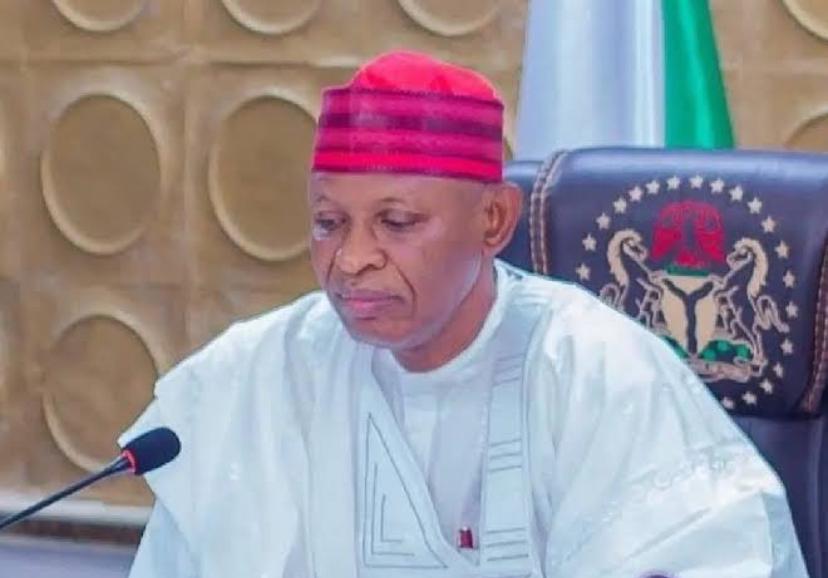
Under the leadership of Abba Kabir Yusuf, Kano is emerging as a frontline state in the push for innovation led growth. By hosting this critical North-West launch, the administration is making a clear and strategic statement that Kano intends not only to participate in Nigeria’s industrial transformation, but to help lead it.
This is significant because Nigeria’s economic future will not be secured by federal policies alone. It will depend on how effectively those policies are domesticated, adapted, and implemented at the sub national level. In this regard, Governor Abba Kabir Yusuf has demonstrated a governance approach that prioritizes alignment with national development frameworks while advancing the specific economic strengths of the state.
Executive Order 5 emphasizes the use of local professionals, the development of indigenous capacity, and the reduction of dependence on foreign goods and services. These are not abstract ideals they are practical economic strategies. Kano’s embrace of this framework signals a shift toward harnessing its vast human capital, agricultural resources, and commercial heritage to build a more self reliant economy.
Through the Energise Commercialisation Now initiative, the state is contributing to a broader national effort to connect research institutions with industry, identify market ready innovations, and create pathways for commercialization. This is how economies grow by turning ideas into products, and products into jobs.
Just as importantly, Kano’s role in this initiative reflects a new model of federal state collaboration. With coordination provided by the Strategy Implementation Task Office for Presidential Executive Order 5 under the Federal Ministry of Innovation, Science and Technology, the programme demonstrates how structured alignment can bridge the gap between policy formulation and execution.
However, coordination alone is not enough. What Kano illustrates is that leadership at the state level remains the decisive factor. Political will, institutional support, and strategic clarity are what transform national directives into measurable outcomes.
The broader implication is clear: Nigeria cannot achieve economic sovereignty while remaining dependent on imported solutions for domestic challenges. Executive Order 5 offers a pathway toward reversing that trend, but only if it is backed by sustained commitment across all levels of government.
Kano’s example shows what is possible when that commitment exists. It highlights the importance of states taking ownership of national policies and adapting them to local realities. It also challenges other sub national governments to move beyond symbolic endorsement and embrace active implementation.
As the North West zonal launch takes place, it should serve as both a milestone and a call to action. A milestone, because it marks real progress in operationalizing a critical national policy. And a call to action, because the success of Executive Order 5 will ultimately depend on whether more states are willing to follow the path that Kano is charting.
In the final analysis, the politics of innovation is not about slogans it is about choices. Kano, under Abba Kabir Yusuf, has made its choice. The question now is whether the rest of the country is ready to do the same.