

By: Munir I. Publisher
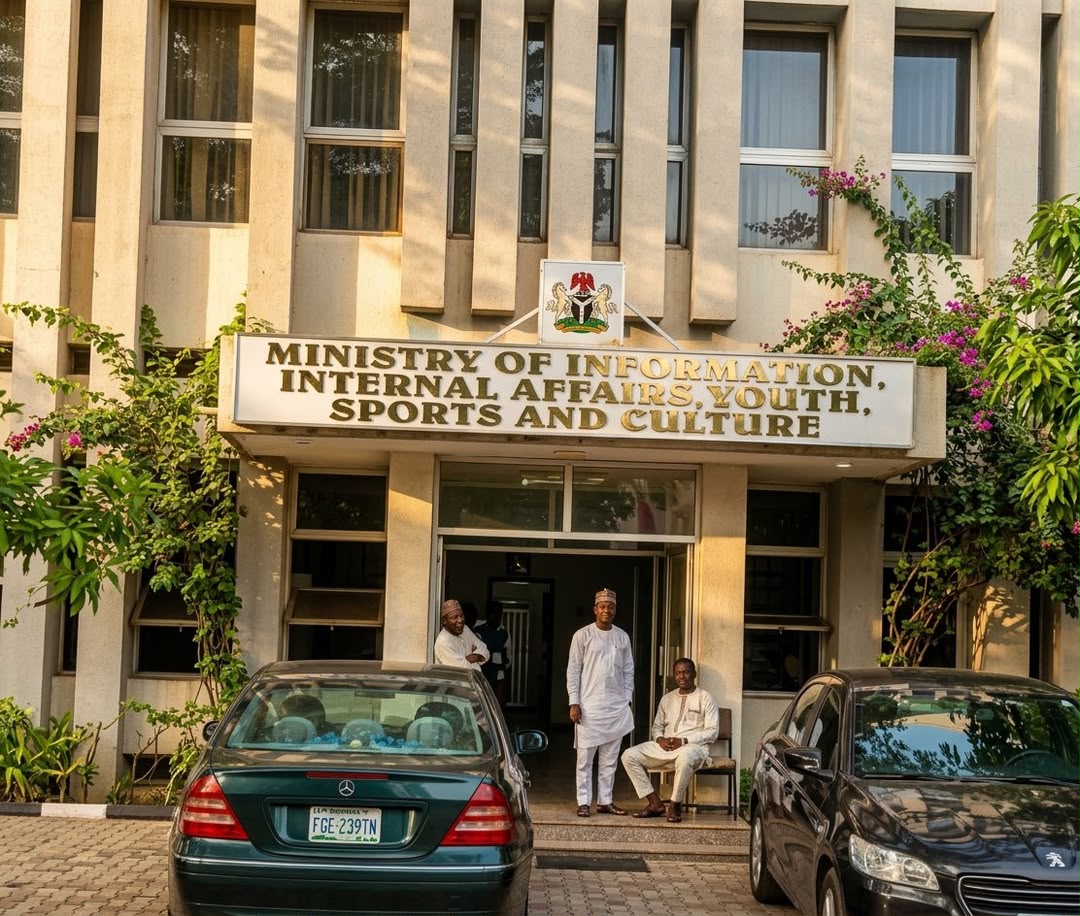
1999 was the year when the democratic governance returned, the Kano State Ministry of Information and Internal Affairs has remained one of the important institutions through which successive administrations communicate their policies, programmes and activities to the people. Its responsibilities have gone beyond the dissemination of official information to include public enlightenment, media relations, government publicity, internal communication and, increasingly, crisis communication and digital engagement. Over the years, the ministry has also experienced changes in structure and nomenclature, reflecting the priorities of different administrations.
From 1999 to the early 2010s, government communication in Kano was largely driven by traditional media, particularly radio, newspapers, television, official press releases and public enlightenment programmes. Institutions such as Radio Kano and Triumph Newspapers played important roles in connecting government with citizens. However, available records concerning some commissioners who served between 1999 and 2015 remain incomplete, making it difficult to establish a fully authoritative chronological record without access to official appointment documents and government archives.
A particularly notable period came under Governor Abdullahi Umar Ganduje, when Muhammad Garba served as Commissioner of Information and Internal Affairs from 2015 to 2023. His eight-year tenure was remarkable for its continuity and strong engagement with the media sector. Among the initiatives associated with his tenure were the revival of Triumph newspaper and investment in a state printing press, as well as the construction of 24 shops for the Nigeria Union of Journalists (NUJ). These interventions demonstrated an effort to strengthen government-owned media and support the wider journalism community.
The election of Governor Abba Kabir Yusuf in 2023 ushered in a new chapter for the ministry. Baba Halilu Dantiye served as Commissioner of Information and Internal Affairs during the early part of the administration before leaving office in December 2024 when the governor reshuffled his cabinet. His tenure came at a time when the communication environment was rapidly changing, with social media, online journalism and misinformation increasingly influencing how citizens received and interpreted information about government.
However, the appointment of Hon. Ibrahim Abdullahi Waiya in January 2025 has marked a particularly important phase in the ministry’s evolution. Waiya came into office at a time when government communication could no longer depend primarily on newspapers, radio and conventional press statements. Recognising this reality, he placed digitalisation, multimedia communication, rapid information dissemination and stronger coordination among government communication officers at the centre of his approach. His emphasis has been on ensuring that government activities are properly documented, communicated promptly and presented to citizens through the platforms where they now consume information.
One of the clearest indications of this new direction under Waiya has been the development of a Digital Multimedia Department within the ministry. The initiative represents more than the creation of another administrative unit rather, it reflects a broader understanding that government must actively participate in the digital information space. Through multimedia content, visual documentation and faster online communication, the ministry is better positioned to tell the story of government projects and policies while also responding to misleading information circulating in the public space. This marks a significant departure from the traditional model in which government largely waited for newspapers, radio and television to carry its message.
Waiya has also placed considerable emphasis on professionalising government communication from within the public service. His engagement with directors, public relations officers and other information personnel demonstrates an attempt to create greater coordination in the way ministries and agencies communicate with the public. This is particularly important in a large state like Kano, where government activities take place across numerous ministries, departments and agencies and where inconsistent communication can easily create confusion. His approach seeks to make the information system more coordinated, responsive and capable of communicating government policies in a clear and accessible manner.
Another area in which Waiya’s contribution deserves particular attention is crisis communication. In today’s information environment, a security incident, political development or public-health emergency can generate thousands of reports and reactions within minutes. Government therefore needs a communication system capable of providing accurate information quickly, correcting misinformation and maintaining public confidence. Waiya’s emphasis on timely communication and his recognition for crisis communication in 2026 demonstrate the growing importance he has attached to this responsibility. His approach suggests an understanding that effective government communication is not merely about promoting achievements but, it is equally about providing credible information when citizens are anxious, confused or seeking clarification.
When the commissioners who have served the ministry between 1999 and 2026 are assessed, of course Muhammad Garba remains significant because of his eight-year tenure and his documented contributions to traditional media infrastructure, particularly the revival of Triumph and support for the journalism community. Nevertheless, Waiya’s contribution is distinctive because he is leading the ministry through a fundamental change in the nature of government communication itself, he is attempting to build a communication structure suited to the digital age. His ultimate place in the ministry’s history will depend on how effectively these reforms are institutionalised and sustained beyond his tenure.
The story of Kano State’s Ministry of Information and Internal Affairs is therefore also the story of the changing relationship between government and society. From radio broadcasts and newspapers to social media, multimedia production and real-time crisis communication, the ministry has had to continually adapt to changing technology and public expectations. Hon. Ibrahim Abdullahi Waiya’s tenure stands out within this evolution for its deliberate emphasis on digital transformation, professional communication, multimedia documentation and crisis response. If these initiatives are sustained and developed into permanent institutional structures, his tenure could eventually be remembered not merely as another chapter in the ministry’s history, but as a period in which Kano fundamentally repositioned government communication for the digital age.