

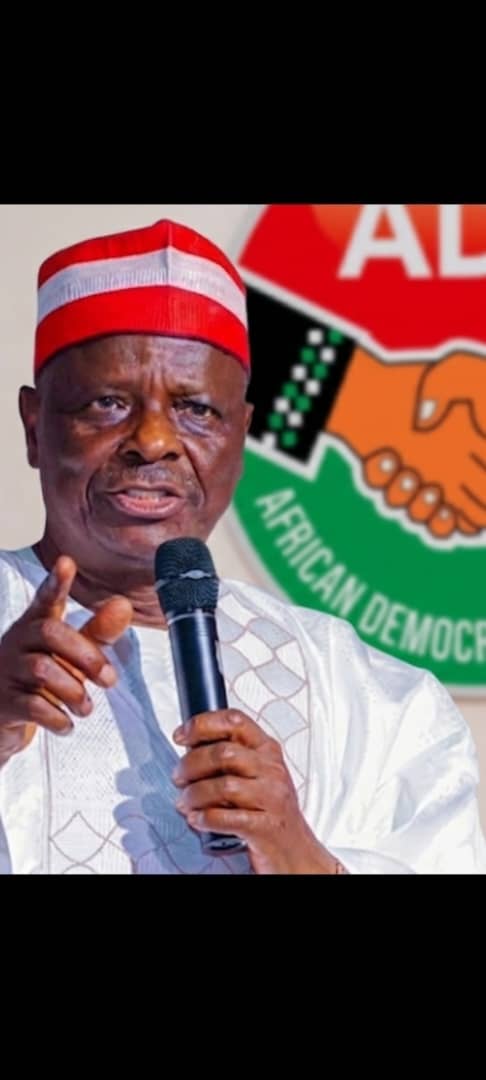
…Self-inflictrd political damage. How obsession may be consuming Kwankwaso.
By Shariff Aminu Ahlan
Watching the recent interview granted by Rabiu Musa Kwankwaso leaves one stunned, confused, disturbed, and utterly disappointed. A man who has attained a significant age, influence, and leadership status unexpectedly descended into utterances more commonly associated with political street combatants than with statesmen.
In what appeared to be a deeply emotional and wounded outing, Kwankwaso revealed information that had long remained hidden and consistently denied by some of his ardent followers. Throughout the interview, he repeatedly returned to one familiar narrative: betrayal. It became his most frequently used expression as he launched one controversial statement after another, all seemingly driven by frustration and an overwhelming fixation on His Excellency, Abba Kabir Yusuf.
Ironically, the interview became a spectacle of contradictions. While attempting to justify his political endorsements and previous decisions, particularly his support for alliances and political calculations, Kwankwaso found himself entangled in allegations and explanations that appeared inconsistent and unconvincing. It looked more like a desperate attempt to defend personal interests and maintain relevance within the corridors of power.
The self-acclaimed supreme leader of the Kwankwasiyya movement boldly claimed that he single-handedly brought Abba Kabir Yusuf into political prominence and therefore expected loyalty and complete submission. He suggested that appointments and political structures belonged more to the association and its inner circle than to the Governor himself.
This revelation directly contradicts years of narratives advanced by some of his followers, who consistently argued that appointments and government decisions were made with the full consent and authority of Abba Kabir Yusuf. The interview unexpectedly exposed cracks within a narrative many had defended passionately.
Still appearing emotionally unsettled and visibly agitated, Kwankwaso shifted toward personal attacks. He reportedly directed harsh words against a respected professor Mahdi, regarded as one of Northern Nigeria’s prominent voices and advocates. Rather than engaging issues with facts and decorum, he resorted to language many observers considered unnecessary and beneath the standard expected from someone of his stature.
More disturbing was the perceived encouragement of verbal attacks against perceived opponents. Such rhetoric, critics argue, does little to strengthen democratic discourse and instead deepens division.
In defending his new political calculations and preferred alliances, Kwankwaso dismissed allegations of Northern marginalization as mere propaganda designed by opponents. He insisted that certain controversial actions widely attributed to political allies were misunderstood and attempted to portray his endorsed political partners as patriotic figures committed to development across Northern Nigeria.
He further maintained that their pursuit of power had nothing to do with religion, ethnicity, or selfish ambition but was instead driven by service and patriotism. Yet critics continue to point out what they describe as glaring contradictions.
The same Kwankwaso who now speaks of respect for scholars, religious figures, and traditional institutions had, on previous occasions, openly criticized some of these institutions and urged them to stay away from politics. Such inconsistencies continue to raise questions regarding political sincerity and consistency.
Equally intriguing are longstanding allegations that Kwankwaso has maintained a behind-the-scenes relationship with the current administration, a claim widely debated in political circles. While he dismissed such allegations and argued that his mission remains the protection of Northern interests, his explanations appeared to generate even more questions than answers. Particularly striking was his claim that he once rejected a ministerial offer because such a position would “drain his energy.” Critics have questioned that explanation, wondering how a vice-presidential ambition would somehow be less demanding while simultaneously providing greater opportunities to protect Northern interests.
Politics remains a battlefield of interests, calculations, alliances, and ambitions. However, when emotions begin to overshadow strategy, and obsession begins to replace measured judgment, political actors may unknowingly expose vulnerabilities that diminish their stature rather than strengthen it.
And perhaps that is the most revealing takeaway from Kwankwaso’s recent outing: when frustration speaks too loudly, even the strongest political voices can begin to sound uncertain.