

By: Ibrahim M. Ibrahim (A Concerned Former Kwankwasiyya Loyalist)
Politically consistency is one of the strongest currencies of credibility. Political actors often build their reputations around principles, ideological positions, and public declarations. However, when actions appear to contradict earlier positions, public scrutiny becomes inevitable.
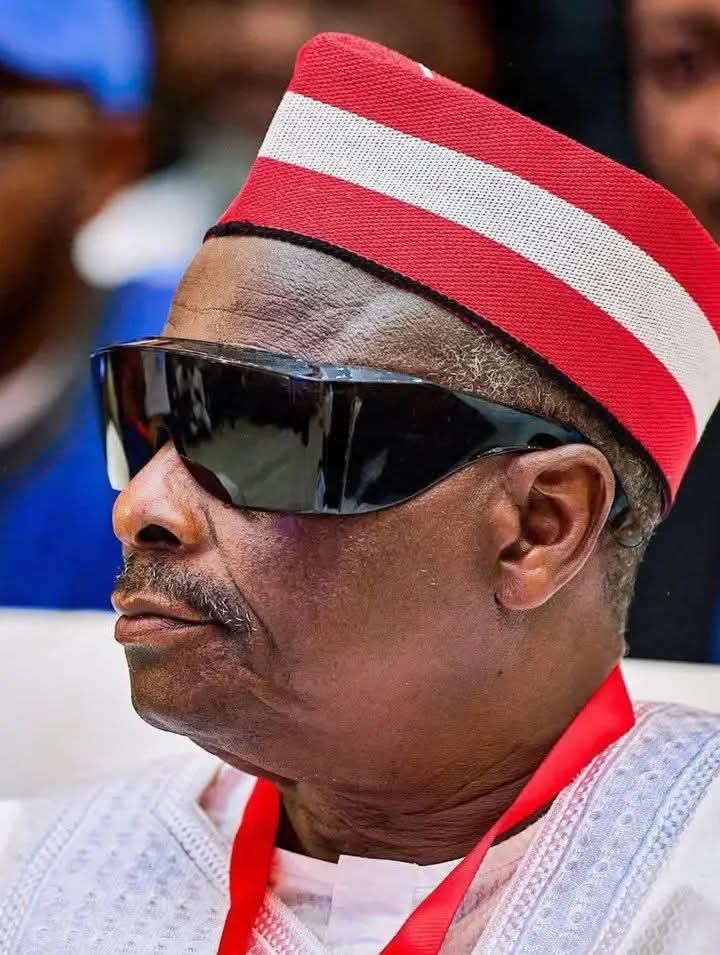
Former Kano State Governor and leader of the Kwankwasiyya movement, Rabiu Musa Kwankwaso, is once again at the center of national political discourse following growing speculations surrounding a possible vice presidential arrangement with Peter Obi ahead of the 2027 general elections.
This development has revived memories of the 2023 presidential election period when Kwankwaso reportedly rejected the idea of becoming Peter Obi’s running mate. At the time, political discussions across the country suggested that Kwankwaso considered himself politically senior, more experienced, and too established to occupy the vice presidential seat. The former governor repeatedly argued that a man with his political résumé, a former governor, minister, senator, presidential candidate, and holder of a PhD, could not accept what he described politically as a “spare tyre” position.
That position became one of the defining narratives that prevented a possible alliance between the New Nigeria Peoples Party (NNPP) and the Labour Party in 2023.
Today, however, the political atmosphere appears different.
Reports and speculations indicating that Kwankwaso may now be willing to accept a vice presidential role under Peter Obi have naturally triggered public debate. The central question many observers are asking is straightforward: what has changed between 2023 and now?
If the vice presidency was considered politically unsuitable or beneath his stature in 2023, why is it now appearing acceptable?
This question is not merely about political ambition. It is fundamentally about political consistency and public trust. In democratic societies, voters often evaluate politicians not only by their promises but also by the stability of their convictions.
Critics argue that such a move may create the impression that personal political survival is gradually taking precedence over earlier principles and public posturing. Supporters, on the other hand, may defend it as political maturity, compromise, and strategic coalition-building necessary to challenge the ruling establishment.
Yet, beyond coalition politics lies another sensitive dimension: public perception.
Many Nigerians still remember the language used by Kwankwaso and his supporters and loyalists during the 2023 negotiations. The phrase “Kwankwaso cannot be a spare tyre” became a recurring political slogan. If the same arrangement now becomes politically attractive, opponents may inevitably use it to question whether the earlier rejection was truly based on principle or simply on calculations of political advantage.
Furthermore, allegations circulating in political circles, though unverified, have also intensified the debate. Some claims suggest that external financial interests may be influencing political realignments in order to weaken or divide northern political influence ahead of the next election cycle. While no credible evidence has publicly substantiated such allegations, their circulation reflects the growing mistrust and suspicion that often accompany high-level political negotiations in Nigeria.
It is important, however, to separate speculation from established facts. Political analysis must remain grounded in observable developments rather than emotional assumptions. Alliances are common features of democratic politics, and politicians frequently adjust strategies based on changing electoral realities.
Nevertheless, the burden of explanation often falls on leaders who make dramatic shifts from previous positions. Nigerians will naturally seek clarity when political figures appear to reverse earlier principles or rhetoric.
As the 2027 political landscape gradually takes shape, citizens will continue watching carefully, not only to see who forms alliances, but also to determine whether such alliances are driven by national interest or personal political calculations.