

By Abdu Saidu
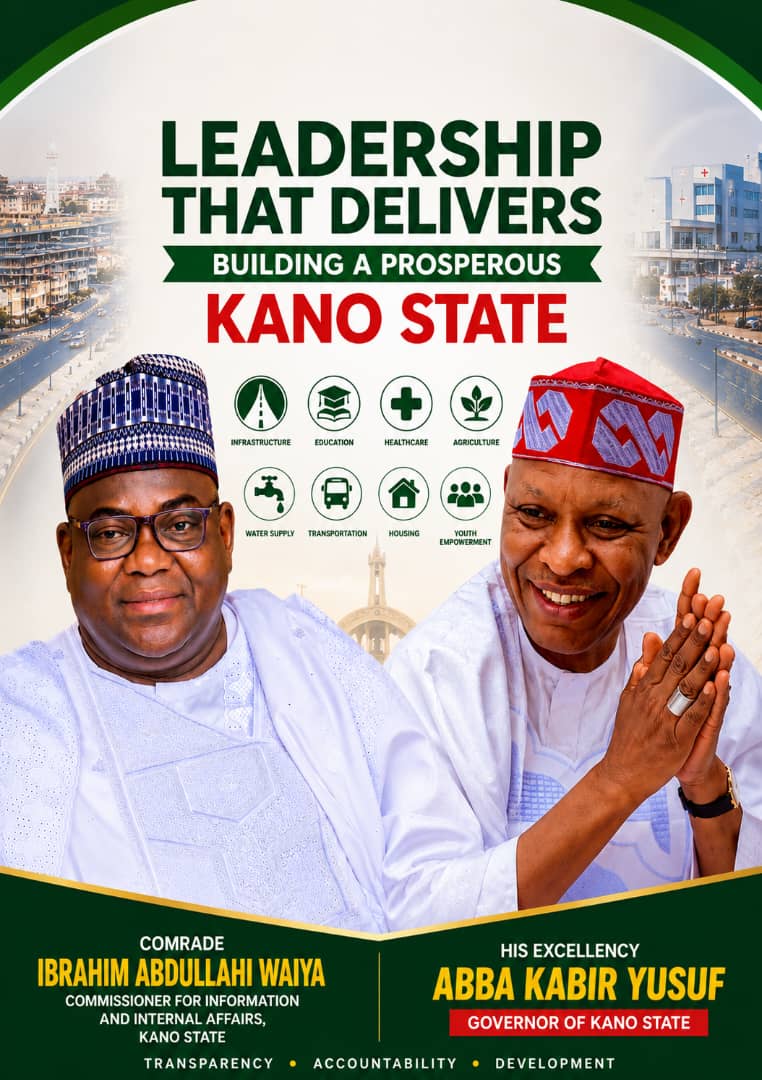
Governor Abba Kabir Yusuf has made infrastructure and people-centred development the cornerstone of his administration, pursuing investments across roads, education, healthcare, agriculture, water supply, transportation, housing and other strategic sectors. Across Kano State’s 44 local government areas, ongoing and completed projects have become visible symbols of the government’s drive to improve public services, stimulate economic activity and enhance the quality of life of residents.
From Kano metropolis to rural communities, the administration’s development agenda is reflected in the construction and rehabilitation of roads, expansion of educational and healthcare facilities, agricultural support programmes, water supply projects and urban renewal initiatives. These interventions have reinforced the government’s commitment to addressing long-standing developmental challenges while creating opportunities for sustainable economic growth and social progress.
Perhaps the most visible signature of the Yusuf administration is its extensive investment in infrastructure. Across the state, major road construction and rehabilitation projects, bridge improvements, drainage networks and urban renewal initiatives have reshaped many communities. These projects have improved connectivity, reduced travel time, enhanced road safety and facilitated commercial activities, enabling residents, traders and transport operators to move more efficiently within Kano metropolis and across the state’s local government areas.
The administration has also prioritised education by renovating schools, constructing new classrooms, supplying furniture and instructional materials and strengthening technical and vocational education. These investments are intended to provide a more conducive learning environment, improve educational outcomes and equip young people with practical skills needed in an evolving economy.
Healthcare remains another key pillar of the government’s development agenda. Renovation of hospitals and primary healthcare centres, improved medical infrastructure and efforts to strengthen healthcare services are aimed at expanding access to quality medical care, particularly for underserved communities.
Recognising agriculture as the backbone of Kano State’s economy, the Yusuf administration has introduced programmes designed to support farmers and increase agricultural productivity. Through the provision of improved seedlings and other farm inputs, promotion of mechanised and irrigation farming, support for extension services and encouragement of agricultural value chains, the government seeks to enhance food security, create employment and increase rural incomes. These interventions also align with broader efforts to strengthen Kano’s position as one of Nigeria’s leading agricultural and commercial centres.
The administration has equally invested in water resources through the rehabilitation and expansion of water supply infrastructure intended to improve access to potable water for households, schools, healthcare facilities and businesses. Reliable water supply remains essential to public health, agriculture and industrial development, making the sector a critical component of the state’s development strategy.
Urban renewal programmes have continued to transform Kano metropolis through road expansion, drainage construction, environmental sanitation, rehabilitation of public spaces and improvements in street infrastructure. These initiatives have contributed to a cleaner, safer and more organised urban environment while supporting business activities and improving the overall appearance of the city.
Beyond physical infrastructure, the government has expanded investments in transportation, public markets, housing, youth and women empowerment, entrepreneurship development, sports development, environmental protection and support for small and medium-sized enterprises. Together, these initiatives reflect an integrated development strategy aimed at creating jobs, reducing poverty and promoting inclusive economic growth.
An equally important aspect of the administration’s achievements has been its communication strategy. The Commissioner for Information and Internal Affairs, Comrade Ibrahim Abdullahi Waiya, has played a leading role in ensuring that government policies, programmes and developmental projects are effectively communicated to the people across the state’s 44 local government areas.
Through regular press briefings, project inspection tours, media engagements, town hall interactions, radio and television appearances and strategic collaboration with media organisations, the Ministry of Information and Internal Affairs has continued to provide updates on ongoing and completed projects. These efforts have strengthened transparency, promoted public awareness and enabled citizens to follow the implementation of government policies more closely.
The ministry has also worked closely with civil society organisations, traditional rulers, community leaders and development partners to broaden public understanding of the administration’s policies. This sustained engagement has helped showcase the impact of government projects while strengthening the relationship between the government and the people.
Supporters of the administration contend that Governor Yusuf’s investments in infrastructure, agriculture, education, healthcare, transportation, water resources, housing and economic empowerment demonstrate a comprehensive approach to governance. They argue that the administration is laying the foundation for long-term development by investing in sectors that directly influence economic productivity and social wellbeing.
As implementation of these projects continues, their long-term impact will ultimately be judged by their quality, sustainability and contribution to improving the lives of Kano residents. Nonetheless, the administration’s development footprint is already evident across many communities, where new roads, schools, hospitals, water facilities, agricultural initiatives and public infrastructure are changing the landscape and shaping public discourse on governance.
Taken together, these investments portray an administration seeking to build a legacy through tangible development and improved public services. Whether measured by infrastructure renewal, agricultural transformation, human capital development or strategic public communication, the government of Governor Abba Kabir Yusuf has placed development at the centre of its agenda, while the Ministry of Information and Internal Affairs, under the leadership of Comrade Ibrahim Abdullahi Waiya, continues to project these initiatives across Kano State’s 44 local government areas.