


By Mohammed Babagana Abubakar
Unifier Project Coordinator, Kano State
In the pursuit of sustainable security and social stability, conventional responses have often depended heavily on kinetic force. While maintaining law and order remains essential, genuine and lasting peace requires a broader vision one that heals communities, restores dignity, and redirects lives toward productive engagement.
This is precisely the transformative path being championed by the Kano State Government through the Safe Corridor Project, a non kinetic initiative that represents a major milestone in Kano’s evolving approach to peacebuilding, rehabilitation, and community reintegration.
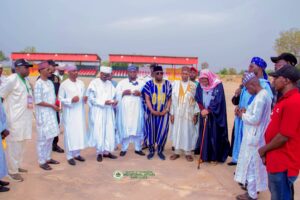
The momentum behind this ambitious initiative became even more evident on Sunday, when the Chairman of the Safe Corridor Project Committee and Kano State Commissioner for Information and Internal Affairs, Ibrahim Abdullahi Waiya, led committee members on an extensive inspection tour of the designated facilities at the Corporate Institute in Gabasawa.
Far from being ceremonial, the inspection was a practical and rigorous assessment aimed at ensuring that every aspect of the infrastructure from accommodation facilities and training halls to administrative units meets the operational standards required for the successful implementation of the program.
The confidence and satisfaction expressed by committee members during the visit reflected the depth of preparation already undertaken and reinforced optimism ahead of the project’s official launch.
What distinguishes the Safe Corridor Project as a game changing initiative is its guiding philosophy. It recognizes a critical reality. security challenges cannot be solved through force alone. Lasting peace must be built by addressing the underlying social, psychological, and economic conditions that often fuel instability.
By emphasizing dialogue, education, mental reorientation, vocational development, and economic empowerment, the initiative provides participants with a structured pathway toward rehabilitation and responsible reintegration into society.
This approach marks a decisive shift from mere containment to genuine transformation. It seeks not only to reduce insecurity but also to rebuild lives ensuring that beneficiaries return to their communities as responsible, productive citizens capable of contributing positively to the socioeconomic development of Kano State.
Programs of this magnitude require disciplined coordination, strategic planning, and committed leadership. Kano State is fortunate to have Ibrahim Abdullahi Waiya providing that direction through his active oversight of the project.
His direct engagement during the inspection exercise demonstrated not only administrative seriousness but also a deep commitment to public service and sustainable peacebuilding.
Speaking during the facility tour, Comrade Waiya reaffirmed that the initiative reflects the unwavering commitment of the Kano State Government toward strengthening peace, social stability, and grassroots development across the state.
Under his leadership, the committee has remained focused on ensuring that every operational detail aligns seamlessly for a successful take-off.
As the Unifier Project Coordinator for Kano State, I view the Safe Corridor Project not merely as a government intervention, but as a collective investment in the future of our communities. It offers a framework through which old divisions can heal, trust can be rebuilt, and vulnerable individuals can rediscover purpose and direction.
With final administrative arrangements now being concluded ahead of the official launch, Kano State is positioning itself at the forefront of modern, humane, and strategic governance.
Under the visionary leadership of Abba Kabir Yusuf and the focused coordination of Ibrahim Abdullahi Waiya, the state is moving decisively beyond force embracing a future defined by sustainable peace, empowerment, rehabilitation, and shared prosperity.