

By Mohammed Babagana Abubakar
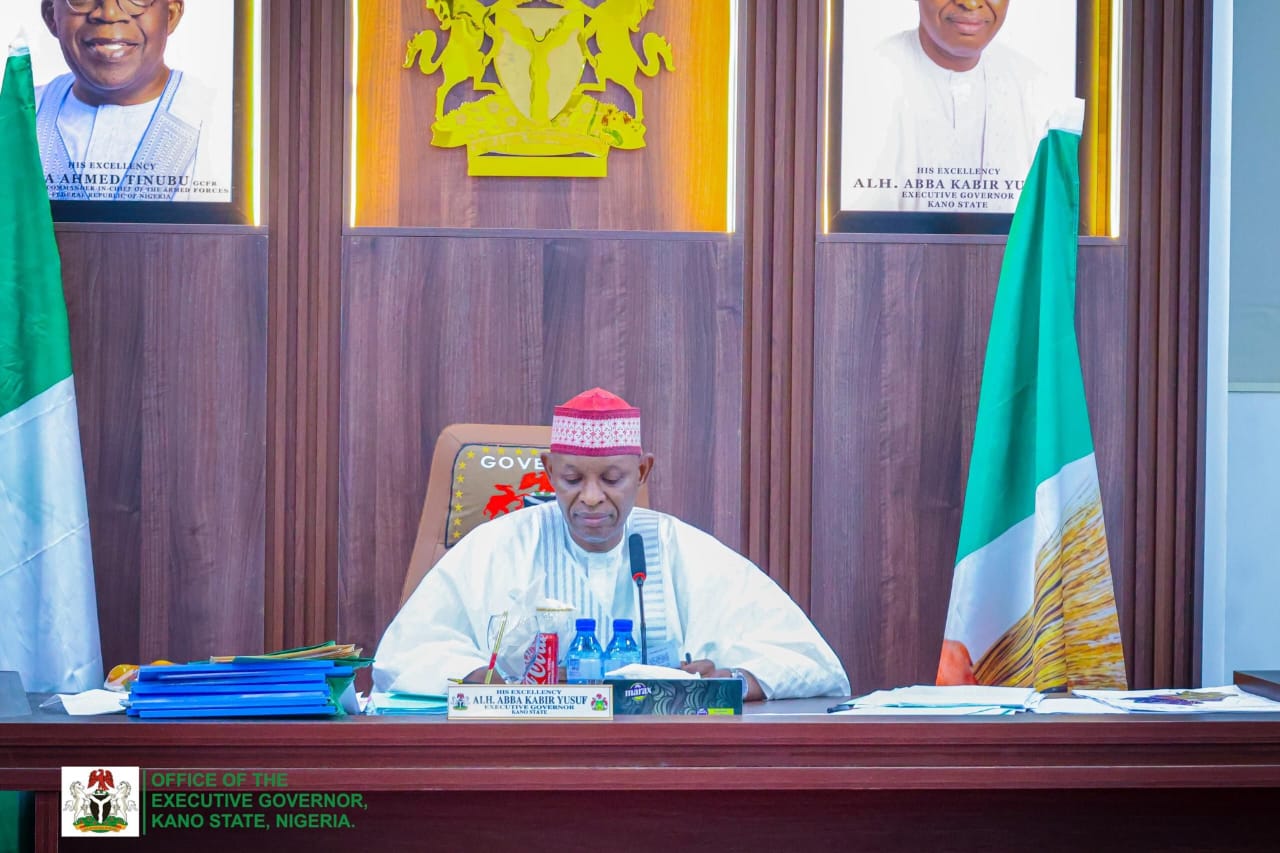
Governance is not defined by ceremonies, press statements, or political noise. It is defined by decisions tough, calculated, and often invisible decisions taken where it matters most, inside the chambers of the State Executive Council.
Under the leadership of Abba Kabir Yusuf, those chambers have become more than a routine administrative space. They are now the command center of a deliberate and unapologetic transformation agenda one that is steadily turning the vision of Sabuwar Kano into measurable reality.
This is not governance by chance. This is governance by design.
For too long, infrastructure in Kano was treated as political decoration projects announced, but rarely completed with purpose. That era is being dismantled.
Through decisive Executive Council approvals, projects like the IBB Way reconstruction and the Metropolitan Rail initiative are no longer symbolic they are strategic. These are not just roads and rail lines, they are economic arteries designed to unlock trade, reduce congestion, and reposition Kano as the commercial heartbeat of Northern Nigeria.
This administration understands a simple truth, without infrastructure, there is no economy. And without execution, there is no credibility.
While others pay lip service to education and healthcare, this government is backing its priorities with hard numbers and binding commitments.
The enforcement of a 30% allocation benchmark for education is not just ambitious it is disruptive. It signals a government that is willing to invest heavily in the future, not just manage the present.
At the same time, reforms under the Lafiya Dole initiative are strengthening the healthcare system from within prioritizing workforce development, service delivery, and access. This is how you build a productive society, by investing in the people who power it.
In a political climate often dominated by rhetoric and distractions, the Executive Council has chosen a different path,results over reactions.
Every policy, every approval, and every project is increasingly subjected to data, scrutiny, and performance tracking. This is not governance driven by headlines it is governance driven by outcomes.
The difference is becoming clear. While critics argue, this administration is building. While others speculate, this government is delivering.
A government that cannot communicate its impact risks losing its legitimacy. This administration understands that visibility is accountability.
By integrating digital tools and real-time project documentation, the Executive Council is ensuring that governance is no longer distant or abstract. Citizens can see, track, and assess progress as it happens.
This is more than transparency it is a shift toward participatory governance, where the people are not just observers, but informed stakeholders.
The story of Kano today is not being written in campaign rallies or opposition soundbites. It is being written in policy rooms, in project sites, and in the disciplined decisions of a government that understands the weight of leadership.
Under Abba Kabir Yusuf, Kano is moving with clarity, purpose, and direction away from improvisation and toward structured, sustainable development.
The evidence is no longer theoretical. It is visible, measurable, and unfolding.
Kano is not just changing.
Kano is being rebuilt deliberately, decisively, and without apology.