

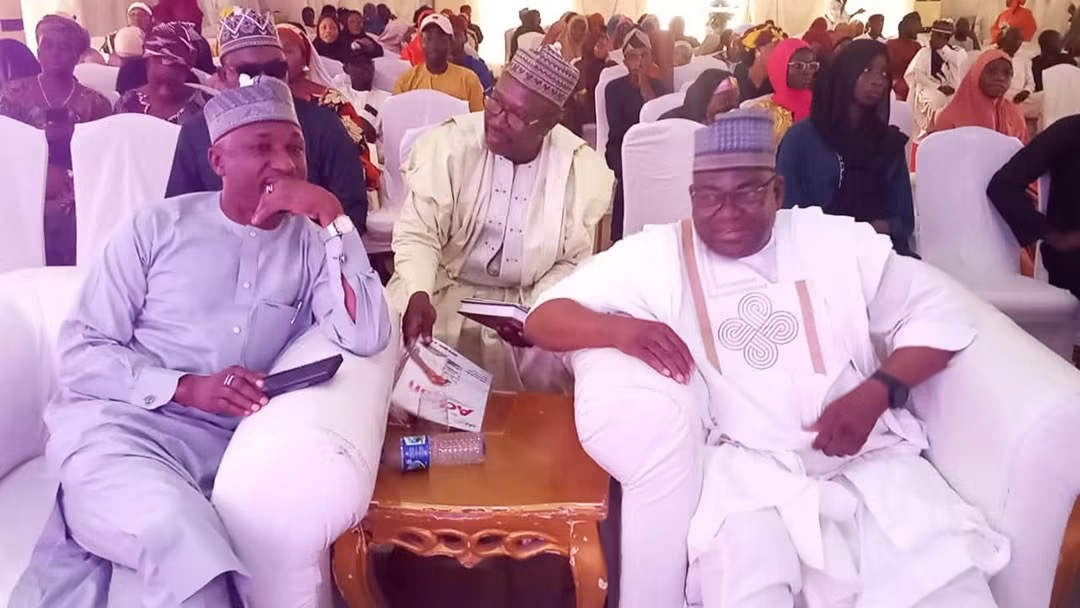
The Kano State Commissioner for Information and Internal Affairs, Comrade Ibrahim Abdullahi Waiya (PhD), has commended Hajara Muhammad Kabir for authoring a book that documents the history and contributions of women to societal development.
The Kano State Commissioner for Information and Internal Affairs, Comrade Ibrahim Abdullahi Waiya (PhD), served as the convener of the public presentation of Northern Women Development, Volume 2: A Historical and Contemporary Perspectives on Northern Nigerian Women, authored by Hajara Muhammad Kabir, in Kaduna.
The event was held at the conference hall of the Ahmadu Bello Sardauna Memorial Foundation, in collaboration with the foundation.
Speaking at the event, Comrade Ibrahim Abdullahi Waiya (PhD) stated that the presentation of the book went beyond the launch of a new publication, describing it as an opportunity to celebrate the contributions, achievements, resilience and exemplary leadership of Northern Nigerian women, who have played significant roles in shaping history and advancing society.
The Commissioner commended the author, Hajara Muhammad Kabir, for her remarkable intellectual contribution, noting that the book had helped to document and preserve the stories and experiences of Northern Nigerian women, safeguard history and inspire future generations.
He added that, as an indigene of Kano State, the author’s work was a source of pride to the state, as it reflected the intellectual contributions of the people of Kano to societal development.
Comrade Waiya further stated that the choice of Queen Amina of Zazzau on the cover of the second volume carried significant symbolism, as it reminded society that Northern Nigerian women had long demonstrated courage, leadership qualities and the capacity to play influential roles in shaping the course of history.
As the Kano State Commissioner for Information and Internal Affairs, he emphasised that sustainable development required inclusive governance, effective communication and deliberate efforts to ensure that women’s interests, contributions and concerns were adequately represented in public discourse and policymaking.
He therefore called on stakeholders, institutions and individuals to support initiatives that promote women’s development, preserve cultural heritage and create opportunities for the next generation of female leaders.
In conclusion, Comrade Ibrahim Abdullahi Waiya (PhD) congratulated Hajara Muhammad Kabir on the achievement, expressing hope that the publication would contribute to the advancement of knowledge, greater inclusion of women in development efforts and the overall progress of Northern Nigeria.
He stressed that history becomes richer when every contribution is recognised, while the future becomes stronger when everyone is given the opportunity to express their views and play a meaningful role.