

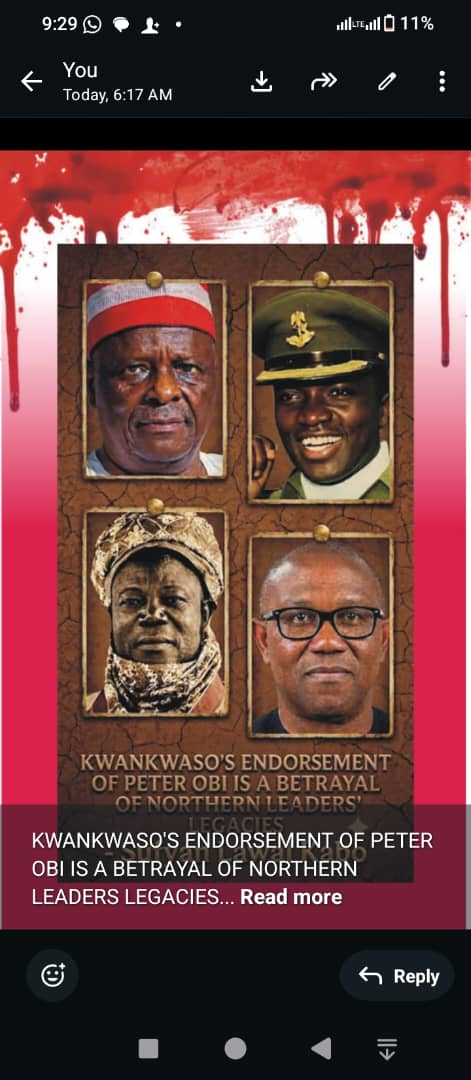
Sufyan Lawal Kabo (Sefjamil)
“The Igbos are more or less the type of people whose desire is mainly to dominate everybody.”
— Sir Ahmadu Bello (Sardauna of Sokoto), Premiere of Northern Nigeria
The late Sardauna of Sokoto made this statement during a BBC television interview between 1960 and 1964, a few years before the January 1966 military coup in which he, his wife Hafsa, Nigeria’s Prime Minister, Sir Abubakar Tafawa Balewa and others were killed during the operation led by Major Patrick Chukwuma Kaduna Nzeogwu.
Nzeogwu was a young Igbo officer who had links to Northern military institutions and whose education was supported by the Sardauna. His father, Mr. James Nzeogwu, was said to have worked within colonial and Northern administrative circles in Kaduna. Born in Kaduna in 1937, Nzeogwu spoke fluent Hausa and was deeply familiar with Northern society, where he grew up and was socially integrated. This made the 1966 coup especially shocking to many Northerners, as the officer leading the Kaduna operation (Nzeogwu) was widely seen as someone “from within.”
The Sardauna was also reported to have shown goodwill toward young Northern-based officers, including Nzeogwu. Between 1957 and 1961, during the Sandhurst graduation period of Nigerian cadets, he is said to have visited and celebrated their achievements.
The later tragedy between Nzeogwu and the Sardauna is often linked to deeper political and cultural interpretations. Sardauna’s earlier comment reflected a long-standing concern about political competition, although he trusted Nzeogwu personally because of his Northern upbringing and integration.
First Attempt:
Noticing the political tensions at the time, Sir Abubakar Tafawa Balewa, after due consultation with Northern stakeholders, reportedly considered or raised the issue of a possible restructuring or breakup of the country into different regional arrangements. However, this proposal was not accepted in the parliament where Dr. Nnamdi Azikiwe played a key role.
Zik not only objected to Balewa’s proposal, but also supported the strengthening of anti secession legal frameworks in early post independence Nigeria, particularly the Treason and Treasonable Offences Decree No. 29 of 1966. His position, according to this interpretation, was that no region should be allowed to secede, as such a move would weaken national cohesion and political balance. The outcome reinforced strong legal barriers against secession, making any attempt to break away from the federation a criminal offence under the decree.
Zik’s reason was to actualize the Igbo dominance of that time. During the colonial and post-amalgamation period (after 1914), many Igbo people were among the earliest groups to acquire Western education under missionary influence. As a result, they became highly visible in administrative and professional sectors across Nigeria: in their Southeast, North and Southwest regions, including teaching, medicine, engineering, clerical work, and banking, especially in urban centers nationwide.
Alongside this, many Igbo migrants also engaged in trade, transport, construction, and small and medium-scale businesses, spreading widely across Nigeria’s towns and cities. This combination of education, mobility, and entrepreneurship contributed to their strong economic presence across the country.
Second Attempt:
In what appears to be a second attempt by the Igbo political bloc to dominate national leadership, the expectation was that the National Council of Nigeria and the Cameroons (NCNC ) would either lead the federal government or at least control it after independence.
There were efforts to position Dr. Nnamdi Azikiwe within the framework of becoming Prime Minister of Nigeria through the NCNC platform. The belief was that the party, having played a major role in the independence struggle, deserved to take control of national leadership, especially in opposition to the dominance of the Northern People’s Congress.
However, the NCNC was unable to secure enough parliamentary seats on its own, as electoral politics in Nigeria at the time was largely determined by numerical strength and regional voting patterns. As a result, the attempt did not succeed.
It was also believed in some accounts that there had been expectations that the British government might support or influence this leadership transition, given the level of Western education and administrative exposure among NCNC elites at the time. However, Britain did not support such an arrangement.
Following these developments, Dr. Nnamdi Azikiwe was eventually assigned the position of President in the post independence political structure, a role that, under the parliamentary system in place at the time, was largely ceremonial in nature compared to executive authority of a Prime Minister.
Third Attempt:
In 1996, the Igbos struck. During the January 15, 1966 military coup in Nigeria, soldiers led in the North by Major Chukwuma Kaduna Nzeogwu stormed Kaduna and attacked the residence of Sir Ahmadu Bello, the Premier of Northern Nigeria, popularly known as the Sardauna of Sokoto. He was killed along with his wife, Hafsatu Bello, during the raid on their home. At the same time, Prime Minister Abubakar Tafawa Balewa was arrested in Lagos by coup soldiers and taken away. His body was later discovered near Ota in present day Ogun State. The coup targeted top political leaders across the country and marked a major turning point in Nigeria’s First Republic, triggering deep political and ethnic tensions that followed. (Source: Max Siollun, Oil, Politics and Violence: Nigeria’s Military Coup Culture (1966–1976))
In A. M. Mainasara’s book Why They Struck (1982), the Igbo coup plotters’ main concern included fears of regional domination by the North. The Igbo coup plotters were uncomfortable with the growing political dominance of Northern leaders. Several controversies were later cited to support the claim that it was an Igbo dominated coup, including:
Dr. Nnamdi Azikiwe was reportedly aware of the coup plot, which is why he traveled out of the country days before January 15, 1966.
√ About 90 percent of the coup plotters were said to be Igbos.
√ Only one Igbo officer was reportedly killed during the coup.
√ Major General Aguiyi Ironsi, an Igbo officer, became head of state immediately afterward.
√ None of the coup plotters was punished by Ironsi; instead, they were treated leniently.
After the coup, which led to the deaths of Ahmadu Bello, Abubakar Tafawa Balewa, and other Northern leaders, anger spread widely across Northern Nigeria. Reports also noted that some individuals in the East were seen as celebrating the events. Among Northerners, a painful memory often recalled was the allegation that images of slain Northern leaders appeared on bread wrappers in some areas: a clear act of ethnic hostility and mockery.
In response, a counter coup carried out by Northern officers led to the killing of Ironsi, and the third attempt was considered to have collapsed.
Fourth Attempt:
Oil was discovered in commercial quantities in Southern Nigeria, particularly in the Niger Delta region, beginning with Oloibiri in 1956. Although the Eastern Region, largely inhabited by the Igbo, was economically active and highly educated, the broader South South region was the main oil producing area. Some Igbo elites were perceived as viewing the region as a strategic economic space from which they could benefit.
The Eastern Region later felt politically and economically marginalized. Failed negotiations such as the Aburi Accord, led the Eastern Region to declare itself the Republic of Biafra in 1967, triggering the civil war which resulted in massive loss of lives estimated in the millions and widespread destruction. After about three years of the war, Biafra was defeated, and Chukwuemeka Odumegwu Ojukwu fled into exile, marking the collapse of the fourth attempt.
Fifth Attempt:
Peter Obi in 2023
Peter’s refusal to accept becoming Atiku Abubakar’s running mate, despite the belief that Atiku would have had a stronger chance of becoming President with him as Vice President than if he contested against any Northern candidate as President, is viewed within this context. Because the contest was seen by some as agenda driven, he declined, and both eventually lost.
This, according to many political analysts, reflects the level of alignment with an alleged underground political plan that involved mobilizing church leaders across Nigeria to influence Christian voters to support Peter Obi. This is why, according to this view, Obi’s strongest campaign activities were concentrated in churches.
Obi repeatedly took his campaign to churches and used ‘take back your country’ rhetoric that many Nigerians interpreted as religiously charged, especially within the tense atmosphere of the 2023 elections.
Their calculation was that if Christians across the country united to vote for him, he would likely win, since Atiku and Rabiu Musa Kwankwaso would split Northern votes. This, it is argued, explains his strong performance in Lagos, as well as the support he received from Yoruba Christians and other ethnic groups who voted for him in churches.
Additional narratives also referenced earlier militant and separatist slogans such as “Biafra or Death” and “Free Nnamdi Kanu,” which, according to critics, later evolved into the political slogan “Obi or Nothing.” This phrase is described by critics as another form of political absolutism that does not align with democratic choice and free will.
The Hausa expression “Sai so so person” simply means “vote for so and so candidate,” whereas “Obi or Nothing,” clearly suggests an either or outcome where only Obi’s victory is acceptable, and no other candidate is considered legitimate, which they argue is inconsistent with democratic principles in a plural political system. Well, that attempt was lost too.
Sixth Attempt:
The rise of Nnamdi Kanu
In 2012, Nnamdi Kanu, an Igbo man with dual citizenship of Nigeria and the United Kingdom, emerged with a forceful agitation for Biafra through an organization he called the Indigenous People of Biafra (IPOB). He used a radio platform known as Radio Biafra to propagate his message.
His mission centered on the restoration of an independent state of Biafra, arguing that the Igbo are politically and economically marginalized within the Nigerian federation. IPOB’s stated objectives include self-determination for the people of the former Eastern Region and the creation of a separate sovereign nation called Biafra.
The Nigerian Federal Government has consistently proscribed IPOB, citing violent incidents linked to its armed wing, the Eastern Security Network (ESN). Kanu’s broadcasts on Radio Biafra instigated the enforcement of Monday Sit-At-Home, attacks on security agents, destruction of government property, and issuing inflammatory statements against Northerners, particularly Hausa Fulani and Yoruba communities. He repeatedly argued that the Hausa Fulani had dominated Nigeria politically, which fueled protests such as “North Must Go”. He also allegedly used abusive language describing Northerners as cows, parasites, thieves, illiterates, and janjaweed etc.
There was limited strong public condemnation from Igbo political leaders, apart from a few governors and politicians, leading many Nigerians to assume widespread support for his agitation within the region.
Following his arrest, Kanu faced a prolonged legal process, was later detained again, prosecuted, and imprisoned, and over time his agitation gradually weakened. This attempt eventually failed too.
Seventh Attempt:
The Christian Genocide claim
Emeka Umeagbalasi is the Founder, Board Chair, and Lead Researcher of the International Society for Civil Liberties and Rule of Law (Intersociety), based in Onitsha, Anambra State, Nigeria. He and Wilfred Anagbe were among those accused of promoting the narrative that contributed to the global “Christian Genocide in Nigeria” framing.
They made presentations in international forums, including engagements in the United States, where they and allied advocacy groups highlighted what they described as systematic attacks on Christian communities in Nigeria. Their testimonies and public statements were later referenced in some U.S. congressional discussions, contributing to the emergence of the “Christian Genocide” claim.
This false narrative overlooks the complexity of Nigeria’s insecurity, which is driven by multiple factors such as land disputes, criminal banditry, insurgency, and communal conflicts affecting both Christians and Muslims depending on location.
In December 2025, the United States carried out precision airstrikes in Sokoto State, northwest Nigeria, in an area described as lacking active bandit presence which was not true. It was believed that the strikes were a broader strategic motive against the North.
Reactions on social media from may Southeasters showed support for the strikes, with calls for further action. Some users even suggested total destruction of Northern dominance, while certain Southeastern voices reportedly urged more external powers to support the breakup of Nigeria and the creation of Biafra.
Eighth Attempt:
They finally saw the opportunity in Kwankwaso’s despracy
With the re-emergence of the 2027 political cycle, many actors believe that victory in Nigeria’s presidency is difficult without Northern support, leading to renewed interest in informal zoning arrangements not explicitly provided for in the Nigerian constitution.
Within this context, attention has shifted toward political alignments involving Rabiu Musa Kwankwaso and Peter Obi.
The alleged arrangement suggests a plan where Peter Obi would serve a single four year term as President, without seeking re election, while Kwankwaso would serve as Vice President and later succeed him in 2031.
This is unrealistic! No Nigerian President would voluntarily relinquish power after one term when constitutionally eligible for re election. Kwankwaso is politically positioning himself within any available structure that could advance his long term ambition for the presidency.
Come to think of it, on what basis should Nigerians especially Northerners vote Peter Obi? Obi did not build a single nursery, primary, secondary school, university, or stand alone hospital in his eight years as Anambra Governor, only he built two breweries. Are Nigerians foolish enough to vote a sympathizer of IPOB? This is the same Peter Obi who publicly disagreed with the Federal Government’s decision to classify Indigenous People of Biafra as a terrorist organization after it was proscribed in 2017.
In a 2017 interview on Obi said:
“The only thing I disagree with is naming IPOB terrorists; they are not terrorists.”
He added that he lived among many of them in Onitsha and had not personally felt threatened by them, imagine.
The only perceived benefits for Kwankwaso in such an arrangement, to my view, is to strengthen his political influence, deal with his internal rivals such as Abba Kabir Yusuf and Abdullahi Umar Ganduje etc, and consolidating national relevance ahead of future contests. At minimum, he would also have served as Vice President of Nigeria, a long standing political aspiration.
This and many other reasons are why the North and Nigeria at large cannot trust Peter Obi and Rabiu Musa Kwankwaso. To us, Kwankwaso presenting an Igbo candidate, especially a person like Peter Obi, at this critical moment in Nigeria’s political history is a serious insult to Northerners and a betrayal of the legacies of Sir Ahmadu Bello, the Sardauna of Sokoto, Abubakar Tafawa Balewa, and other Northern leaders who issued cautionary views regarding perceived Igbo political dominance.
However, it should be well noted that we in the North, we are not against an Igbo person becoming President of Nigeria, but rather against what is perceived as manipulative political entry strategies. Leadership in Nigeria should be based on fairness and mutual respect, not on rhetoric perceived as divisive or on reliance on politically desperate individuals like Kwankwaso. Here in the North…
* We will never entrust the presidency to people who refer to us with derogatory terms such as cows, parasites, almajiris, and other insults.
* We will not vote for people who demand that Northerners living in their states be issued identification cards, while their own people continue to live peacefully in the North, conducting businesses and building homes without discrimination.
* We will not support people who make life difficult for Northerners residing in their regions by denying them traditional community rights and excluding them from local leadership structures.
* We will not vote for people under whose watch Northern owned trucks and cattle transporters are attacked, their drivers killed, and their vehicles burned in parts of the South East.
* The North will not support people who claim to Israelites while openly supporting and celebrating the killings and suffering of our Muslim brothers in the Middle East by Israelis and the US, and who constantly express hostility toward Northern Nigeria, praying for calamities to befall our region and celebrating whenever tragedy strikes, despite the fact that we all belong to the same country.
If the Igbos must attain the presidency, let it be through honest political strategies, as others are doing, not through deception or by leaning on a politician like Rabiu Musa Kwankwaso who has proven to be highly desperate for leadership, even if it may come at the expense of his own region.
Sufyan writes from Abuja