

By Fatima Babangida Yusuf
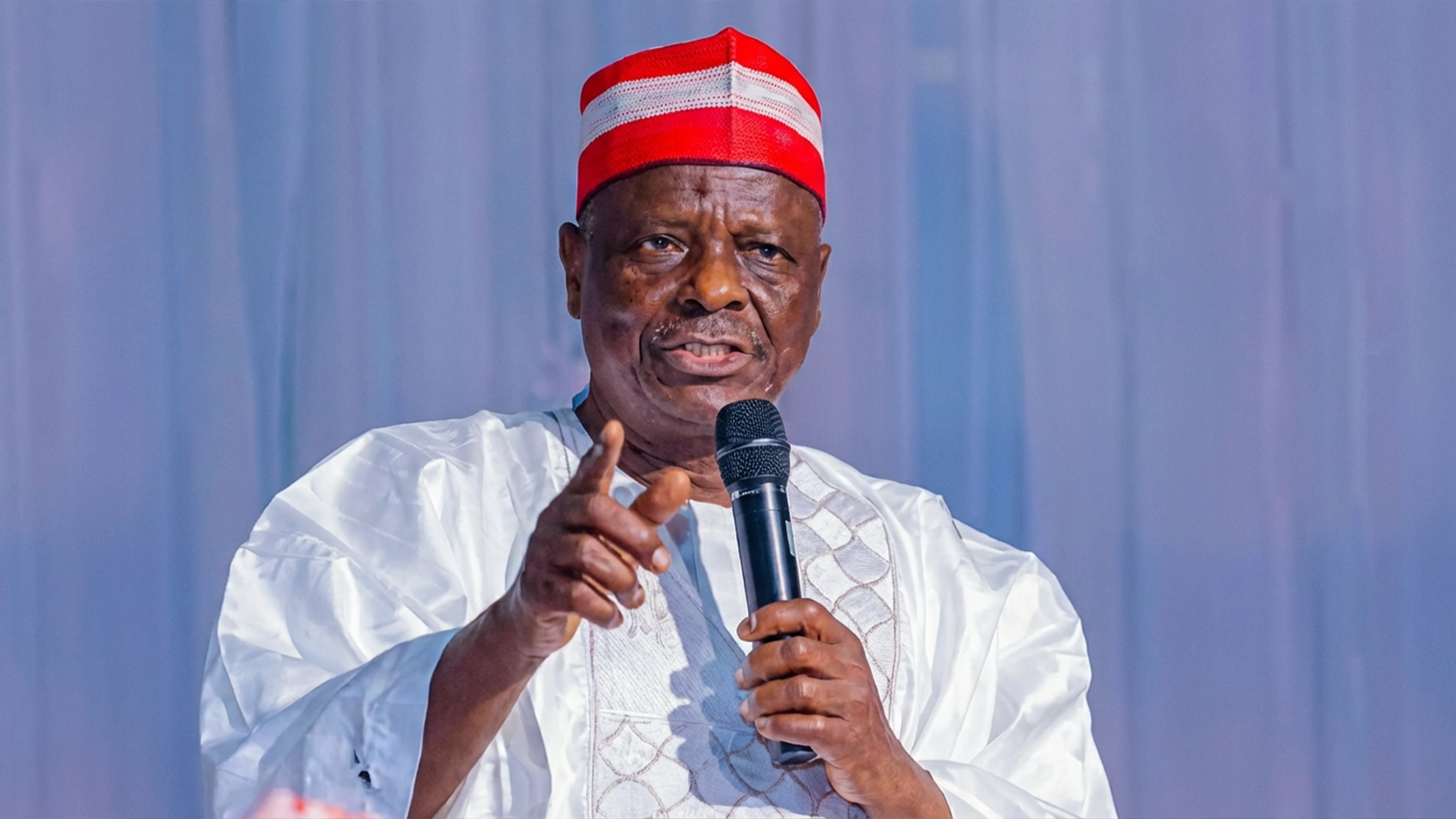
In one of the most discussed political videos circulating across Northern Nigeria, Rabiu Musa Kwankwaso confidently outlined what he considers the qualifications for national leadership. He referenced his PhD in Civil Engineering, his tenure as Governor, his service as Minister of Defence, and his years in the Senate. He also suggested that his political seniority places him beyond the position of deputy in any future alliance.
No reasonable person would deny that these are significant accomplishments. Education deserves respect. Experience matters. Public service should be acknowledged. But the real issue is not whether Senator Kwankwaso is educated or experienced. The real issue is whether leadership in a democracy should be measured primarily by titles, certificates, and status or by continued connection to the people.
That distinction is important because Nigeria today is not suffering from a shortage of politicians with resumes. Nigeria is suffering from a shortage of leaders who remain accountable to the grassroots after rising to national prominence.
One of the greatest weaknesses in Nigerian politics is the culture of entitlement that develops around long serving political figures. After occupying multiple offices, some leaders begin to see public office not as a responsibility, but as a hierarchy of prestige. They begin to believe that certain positions are beneath them, while others are owed to them because of their years in the system.
But democracy does not work like royalty.
In a democracy, no politician becomes permanently superior to the people. Leadership is not inherited through seniority. It is renewed through public trust.
A voter struggling with unemployment in Kano does not care how many political titles a leader has accumulated if those titles have not translated into visible improvement in daily life. A parent worried about insecurity or inflation is not comforted by academic credentials alone. Citizens judge leadership through impact, accessibility, humility, and responsiveness.
That is why the obsession with who is too senior to deputize another sounds disconnected from the realities facing ordinary Nigerians.
Too many politicians believe political relevance is determined in Abuja hotels, television interviews, or elite negotiations. But Nigeria’s political foundation does not begin in conference halls. It begins in the Ward.
The Ward remains the closest point between leadership and the people. It is where citizens express frustration without protocol. It is where hunger has no grammar. It is where insecurity has faces and names. It is where the consequences of failed governance are most visible.
A politician may possess a PhD from the finest institution in the world, but if he has become too distant from his Ward, then he has lost touch with the primary source of democratic legitimacy.
The real examination hall of Nigerian politics is not the university it is the polling unit.
And unlike academic examinations, the people do not award distinctions for grammar, status, or seniority. They reward sincerity, sacrifice, consistency, and visibility.
Nigeria has produced many highly educated leaders over the decades. Yet millions remain trapped in poverty, unemployment, and insecurity. This reality should teach us an important lesson: education alone does not automatically produce transformational leadership.
A certificate can prove intellectual ability. It cannot prove compassion.
A degree can demonstrate technical knowledge. It cannot demonstrate humility.
Political titles may establish experience. They do not guarantee empathy.
The average Nigerian today is not searching for the most decorated politician. Citizens are searching for leaders who understand their suffering, leaders who can communicate hope through action rather than speeches.
This is why grassroots politics remains powerful. It forces leaders to remain connected to reality.
There is another troubling dimension to the conversation around political seniority: it shifts attention away from governance and toward personal ambition.
When political discussions become dominated by arguments over who deserves to lead, who is too big to deputize another, or whose status must be protected, public service becomes secondary. Politics turns into a contest of ego rather than a mission of national development.
True leadership is not measured by the title attached to one’s name.
It is measured by how many lives were improved, how many communities were empowered, how many young people were given opportunity, and how much trust was built among ordinary citizens.
History remembers leaders who solved problems, not merely leaders who occupied positions.
One of the reasons many young Nigerians are increasingly skeptical of established politicians is because of this growing disconnect between political elites and grassroots realities.
Citizens see leaders speaking passionately about coalitions, alliances, and political calculations while families struggle to survive rising food prices and insecurity. They hear debates about “seniority” while schools remain underfunded and hospitals overstretched.
This creates the impression that political elites are competing for power without adequately addressing the conditions of the people.
The danger of this perception is enormous because democracy survives only when citizens believe leaders still understand their realities.
The Foundation Every Engineer Understands
Senator Kwankwaso is an engineer by training. As an engineer, he understands a principle that applies equally to politics, no structure can survive without a stable foundation.
In democracy, that foundation is the grassroots.
No political movement can remain strong after losing connection with ordinary citizens. No national ambition can survive permanently without local trust. And no amount of political experience can substitute for genuine engagement with the people.
The Ward is not a minor political unit. It is the foundation upon which national legitimacy is built.
This moment should not merely become another political argument. It should become an opportunity for reflection among Nigeria’s political class.
The country does not need more political arrogance disguised as experience. Nigeria needs leaders who can combine competence with humility, education with accessibility, and ambition with service.
The future will not belong to those who merely remind Nigerians of their past achievements. It will belong to those who continue earning the confidence of the people in the present. Because in the end, democracy does not ask who has the biggest title.
Democracy asks a simpler question:- Who still stands with the people when the cameras are gone?