

By Munir I. Publisher
History does not always remember leaders for the positions they occupied or the political battles they won, more often, it remembers them for the difficult decisions they made, the burdens they lifted and the lives they touched. In Kano State, Governor Alhaji Abba Kabir Yusuf is steadily building a political and economic legacy that deserves serious attention, particularly in the way his administration has confronted the longstanding financial obligations owed to retired civil servants and the families of deceased workers.
For years, the issue of unpaid gratuities and death benefits remained one of the most painful chapters in Kano’s public service history. Behind every outstanding payment was a human story: a retired civil servant who had devoted decades to government service, a family waiting for its breadwinner’s entitlement, or the dependants of a deceased worker struggling to access benefits that should have been settled long ago. These were not merely figures in government records; they represented years of sacrifice, commitment and expectations.
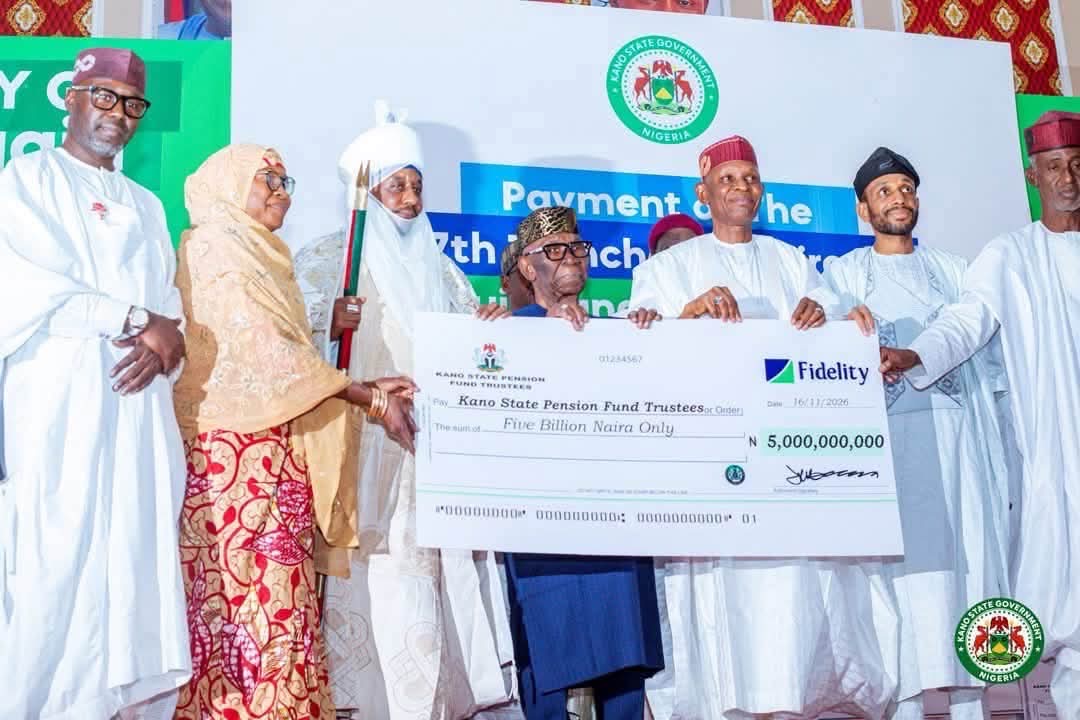
When the Abba Kabir Yusuf administration assumed office in May 2023, it inherited an estimated ₦48 billion in outstanding gratuities and death benefits. Rather than allowing the liability to remain another unresolved item in the state’s financial records, the government embarked on a phased payment strategy. According to reported government figures, seven payment rounds have so far resulted in the release of approximately ₦37 billion, representing about 77 per cent of the inherited liability. This is a substantial intervention, especially considering the competing demands on the resources of a state with Kano’s population and development needs.
What makes this intervention particularly significant is not simply the amount involved, but the decision to give priority to obligations that directly affect the dignity and welfare of ordinary citizens. Releasing billions of naira towards pensioners’ entitlements is more than a financial transaction; it is an acknowledgement that government has a moral responsibility to honour its commitments to those who spent their productive years serving the state. For many beneficiaries, receiving these payments means settling accumulated family responsibilities, accessing healthcare, supporting their children and recovering a measure of financial stability after retirement.
Beyond the gratuity backlog, the administration has also reported an increase in the minimum monthly pension from ₦5,000 to ₦20,000. This is another important policy direction because the welfare of retired workers should not end with the settlement of historical liabilities. A responsible government must also pay attention to the living conditions of pensioners who depend on regular monthly entitlements to survive. These measures deserve to be assessed together as part of a broader conversation about social protection, public-sector responsibility and economic justice.
Of course, leadership should not be judged by announcements alone. The remaining estimated ₦11 billion must be settled, and government must sustain transparency in its disbursement process. Beneficiaries deserve accurate records, timely payments and an accountable system that leaves no eligible retiree or deceased worker’s family behind. The ultimate test of this commitment will be the complete liquidation of verified outstanding liabilities and the prevention of another pension backlog. Nevertheless, acknowledging the progress already made does not diminish the importance of demanding greater accountability; rather, it makes the conversation more constructive and evidence-based.
In the political history of Kano, the pension question is bigger than party affiliation, political rivalry or the struggle for electoral advantage. It concerns the relationship between government and the people whose labour helped build the state’s institutions. A government that takes responsibility for inherited obligations demonstrates an important principle: the continuity of public institutions must include continuity of responsibility. That is why the ongoing intervention deserves recognition beyond the boundaries of partisan politics.
Governor Abba Kabir Yusuf may be remembered for many policies and political decisions during his time in office, but his administration’s efforts to address Kano’s inherited pension liabilities could become one of its most enduring legacies. If the remaining obligations are fully cleared and the payment system is made sustainable, this intervention will stand as a significant chapter in the state’s public-service and economic history. Kano does not need leaders who merely make promises about the welfare of its people; it needs leaders who confront difficult realities and take measurable steps towards resolving them.
The history of Kano politics and governance will continue to examine the achievements and shortcomings of every administration. But one thing should never be overlooked: behind the reported ₦37 billion released towards pensioners’ gratuities and death benefits are thousands of human stories of relief, restored hope and long-awaited entitlements. If this commitment is sustained to its logical conclusion, Abba Kabir Yusuf will have given Kano a legacy that goes beyond political slogans: a reminder that the true value of leadership is measured, ultimately, by the lives it improves.
Munir Ibrahim Publisher
Kano State Coordinator, Renewed Hope Grassroot Movement (RHGM)
Director, Contact and Mobilisation, Northern Youth Assembly (NYA), Kano State Chapter.