

By Comrade Najeeb Nasir Ibrahim
Kano State has never been an ordinary political environment. Its history is defined by political consciousness, intense public engagement, influential personalities and a population deeply invested in the direction of its future.
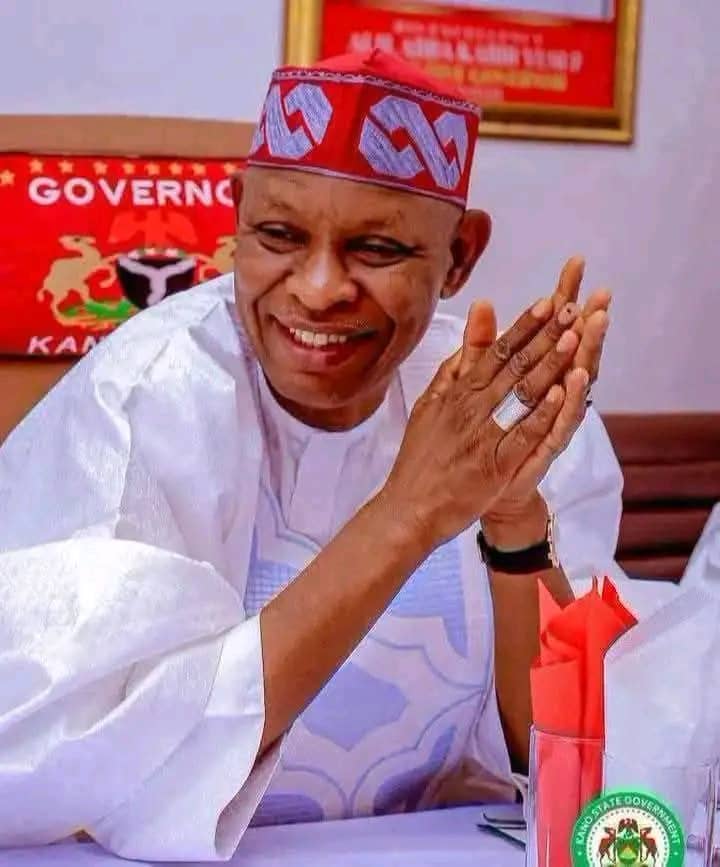
It is therefore against this background that the leadership of Governor Abba Kabir Yusuf deserves serious attention not merely through the lens of partisan politics, but within the broader question of what kind of political and developmental future Kano seeks to build.
At a time when political differences can easily become sources of division, the idea of governance built around inclusion, dialogue, stability and development presents an important alternative.
For supporters of Governor Abba Kabir Yusuf, this represents more than a political slogan. It is a vision of a Kano where political competition does not permanently divide its people, and where development remains the central responsibility of government.
BEYOND THE POLITICS OF PERSONALITIES
For many years, Kano politics has been shaped by powerful personalities, competing political interests and ideological differences.
Political competition is a legitimate feature of democracy. However, when political disagreements become deeper than the interests of the state itself, governance and development can suffer.
The central question before Kano should therefore extend beyond who controls political structures.
The more important question is:
What political environment can best sustain development, strengthen institutions and create opportunities for the people of Kano?
From our perspective, Governor Abba Kabir Yusuf represents an opportunity to place that question at the centre of the political conversation.
His administration has positioned inclusion, grassroots engagement and development as important components of its governance narrative.
The task now is to transform political unity into a lasting institutional and developmental legacy.
THE POLITICS OF INCLUSION
A state as diverse and politically sophisticated as Kano cannot be effectively governed through exclusion.
Government belongs to the entire population—regardless of political affiliation, social background, geographical location or personal differences.
The engagement of grassroots communities, traditional institutions, religious leaders, young people, women and other stakeholders is therefore essential to building a stronger and more cohesive state.
Unity does not mean that everyone must share the same political opinion.
Rather, it means creating a political culture in which differences can exist without becoming barriers to development.
A stronger Kano requires political leaders who can disagree without destroying relationships, compete without undermining institutions, and campaign without losing sight of the common interest.
DEVELOPMENT AS THE TRUE MEASURE OF LEADERSHIP
Political leadership ultimately acquires meaning through its impact on citizens.
The real test of governance is whether public policies improve lives, expand opportunities, strengthen institutions and create conditions in which citizens can pursue their aspirations.
Education, infrastructure, healthcare, human-capital development, economic empowerment and institutional reform are therefore not merely government programmes. They are investments in Kano’s future.
The scale of Kano’s population and its enormous human potential demand policies that are consistent, sustainable and capable of producing results beyond a single political cycle.
Development requires time.
Major infrastructure requires planning and continuity. Institutional reforms require persistence. Human-capital development requires sustained investment. Economic transformation cannot be achieved through short-term political calculations.
This is where the question of continuity becomes relevant.
WHY CONTINUITY MATTERS
Continuity should not be treated as an automatic entitlement of any political leader.
It should be considered within the context of performance, policies, institutional development and the direction in which a state is moving.
Where programmes have been initiated, continuity can provide an opportunity to consolidate them, correct weaknesses, expand successful interventions and complete projects whose full benefits may require longer periods.
That is why the conversation surrounding Governor Abba Kabir Yusuf and a second term should be approached as a conversation about the future direction of Kano.
The people of Kano ultimately retain the constitutional power to decide who governs them.
Our position as supporters of the Governor is that the administration should be given the opportunity to continue its development agenda for another term.
A SECOND TERM AS A CHAPTER OF CONSOLIDATION
The first term of any administration can establish foundations. A subsequent term, where granted by the electorate, can provide an opportunity to consolidate and expand those foundations.
For Governor Abba Kabir Yusuf, that opportunity should be defined by measurable development targets.
A future administration should seek to accelerate infrastructure development, deepen investment in education and human capital, strengthen public institutions, expand economic opportunities and ensure that rural and urban communities alike benefit from government programmes.
Continuity should therefore never mean complacency.
It should mean building on what works, correcting what does not, and pursuing higher standards of public service.
That is the standard the people of Kano should demand from any government.
THE VISION OF A GREATER KANO
The Kano we seek to build cannot be defined only by the politics of today.
A greater Kano must be a state where young people can see a future for themselves; where education provides genuine opportunity; where infrastructure supports economic activity; where institutions command public confidence; where communities participate in governance; and where political differences do not prevent collective action.
It must also be a Kano capable of transforming its enormous population into an economic and human-capital advantage.
This requires leadership that thinks beyond the next election.
It requires policies that survive political cycles.
It requires institutions that outlive individual politicians.
And above all, it requires citizens who place the long-term interest of Kano above temporary political disagreements.
THE CASE FOR CONTINUITY
As the 2027 political season approaches, Kano will once again become the centre of intense political debate.
Different candidates will present different visions. Political parties will mobilise their supporters. Citizens will examine records, promises and priorities.
In that process, supporters of Governor Abba Kabir Yusuf will make their own case for continuity.
Our argument is straightforward:
Where development programmes have been initiated, where a governing direction has been established, and where further work remains to be done, the people should have the opportunity to consider whether continuity serves their long-term interests.
For us, that consideration leads to support for a second term for Governor Abba Kabir Yusuf.
But ultimately, the decision belongs to the people of Kano.
FROM POLITICAL UNITY TO DEVELOPMENTAL LEGACY
Governor Abba Kabir Yusuf’s greatest opportunity is not simply to win another political contest.
It is to leave behind a legacy in which Kano became more united, more institutionally resilient and more development-focused.
Political victories are temporary.
A developmental legacy can endure for generations.
The true measure of leadership is therefore not merely how fiercely a political battle was fought, but what was built after the battle was over.
Kano needs political competition, but it also needs political maturity.
It needs ambition, but it also needs responsibility.
It needs leaders who can mobilise people, but it equally needs leaders who can unite them around common objectives.
2027 AND THE FUTURE OF KANO
The 2027 election will provide the people of Kano with another opportunity to determine the political direction of their state.
For supporters of Governor Abba Kabir Yusuf, the message is clear:
Abba Kabir Yusuf for a second term.
Not simply for the sake of occupying political office.
But for continuity of programmes, consolidation of development, stronger institutions, greater inclusion and the pursuit of a more prosperous Kano.
The ultimate vision is bigger than any individual.
It is a Kano where political differences do not destroy the common bond among its people.
A Kano where development reaches communities.
A Kano where young people have opportunities.
A Kano where institutions are strengthened.
A Kano that looks beyond today’s political battles and prepares for tomorrow’s challenges.
That is the vision we believe deserves continued public discussion.
For continuity.
For unity.
For development.
For a greater Kano.
Abba Kabir Yusuf and the Greater Kano Vision.
The future of Kano must be built on what unites its people, strengthens its institutions and expands opportunities for generations yet unborn.