

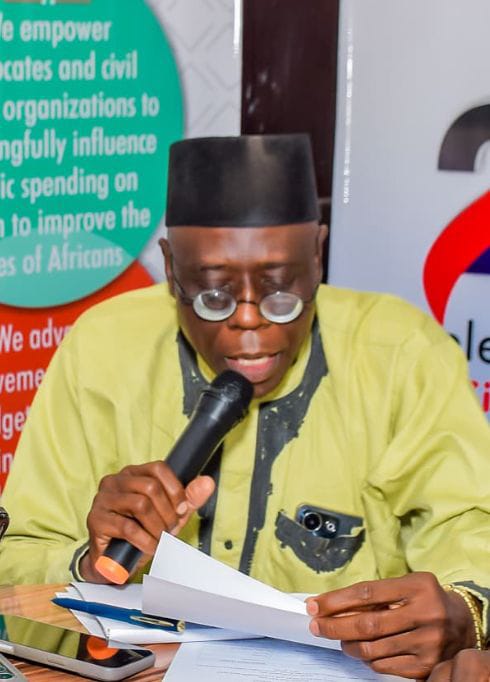
By Tijjani Sarki
Good Governance Advocate and Public Policy Analyst
There comes a defining moment in the life of every nation when it must decide whether it will be governed by sentiment or by substance. Nigeria is facing such a defining test, one that will shape not just the next election cycle, but the very character of its democracy for generations to come. The growing insistence on rotational presidency, though rooted in historical grievances, now risks weakening the foundation upon which true democratic progress is built.
In the thought-provoking piece titled “Rotational Presidency is not Democracy: Democratic System is not About Religion, Region or Tribe it is About Merit, Competence and Patriotism,” Abbati Bako reminds us of a truth we have gradually abandoned: democracy is not an ethnic negotiation table, it is a competitive arena of ideas, vision, and leadership capacity.
At its core, democracy is about choice, free, fair, and informed choice. The 1999 Constitution of the Federal Republic of Nigeria (as amended) guarantees citizens the right to vote and be voted for, without prescribing any rigid rotation of executive power among regions. While Section 14(3) introduces the principle of federal character to ensure inclusiveness in appointments, it does not mandate zoning of the presidency. Instead, it emphasizes fairness in representatio, not the surrender of merit.
Globally, enduring democracies have thrived not because they rotate power artificially, but because they protect the sanctity of the ballot and the supremacy of competence. In the United States, across more than two centuries and over 45 presidents, no constitutional clause has ever required power to shift between regions. Yet leadership has evolved through the strength of ideas, party systems, and national appeal. Similarly, in the United Kingdom, leadership emerges from the parliamentary majority, not geographic entitlement. In Germany, coalition-building and policy credibility determine who governs. Even in the vast diversity of India, prime ministers are elected based on electoral strength and governance track record, not rotational arrangements among regions or religions.
But beyond these comparisons lies a deeper, more painful reality, one that speaks directly to the Nigerian experience. Our hospitals are overwhelmed, our youth are burdened by unemployment, our farmers battle insecurity, and our economy struggles under the weight of uncertainty. In moments like these, leadership is not a ceremonial slot to be shared, it is a lifeline. It is the difference between a child going to school or remaining on the streets, between a business surviving or collapsing, between hope and despair.
When a nation is hurting, it does not ask where its leader comes from, it asks what that leader can do. It asks for courage in crisis, clarity in confusion, and competence in governance. It cries out for a leader who understands the urgency of reform, who feels the pain of the people, and who possesses the capacity to act decisively. To reduce such a critical responsibility to a matter of rotation is to ignore the silent cries of millions who depend on leadership not for symbolism, but for survival.
The words often attributed to Abraham Lincoln, democracy as “government of the people, by the people, for the people”, capture the moral essence of leadership. It is a sacred trust, not a regional entitlement. Leaders are elected to solve problems, not to symbolize balance.
Nigeria must confront an uncomfortable truth, rotation may create temporary political comfort, but it cannot build a strong nation. It may calm elite tensions, but it cannot fix insecurity in the North-West or revive economic productivity in the South-East. It may satisfy political agreements, but it cannot deliver electricity, quality education, or sustainable jobs.
Yes, the fears of marginalization are real. Nigeria’s history carries the weight of imbalance, and no honest observer can dismiss those concerns. But the answer cannot be to weaken democracy in the name of managing diversity. The answer is to deepen democracy, to strengthen institutions, enforce accountability, promote internal party democracy, and ensure that every vote truly counts.
The question before us is simple but profound, should leadership be a reward for identity, or a responsibility earned through ability?
A nation as vast and promising as Nigeria cannot afford to reduce its highest office to a rotational bargain. The presidency is not a token to be exchanged, it is the engine room of national transformation.
Let us rise above the politics of division and embrace the politics of direction. Let merit speak louder than ethnicity. Let competence overshadow convenience. Let patriotism silence parochial interests.
Because in the end, history will not remember which region produced a president, it will remember what that president did for Nigeria.
Sarki wrote from Accient City of Kano